
Last updated May 7, 2026
The honest answer about HRT and weight
If you've read that HRT causes weight gain — randomized trials don't back that up. If you've read that HRT causes weight loss — they don't back that up either. The 2002 Women's Health Initiative study (the largest HRT trial ever run) found no real weight difference between women on HRT and women on placebo, over years of follow-up.
What HRT actually does for your weight is indirect. It:
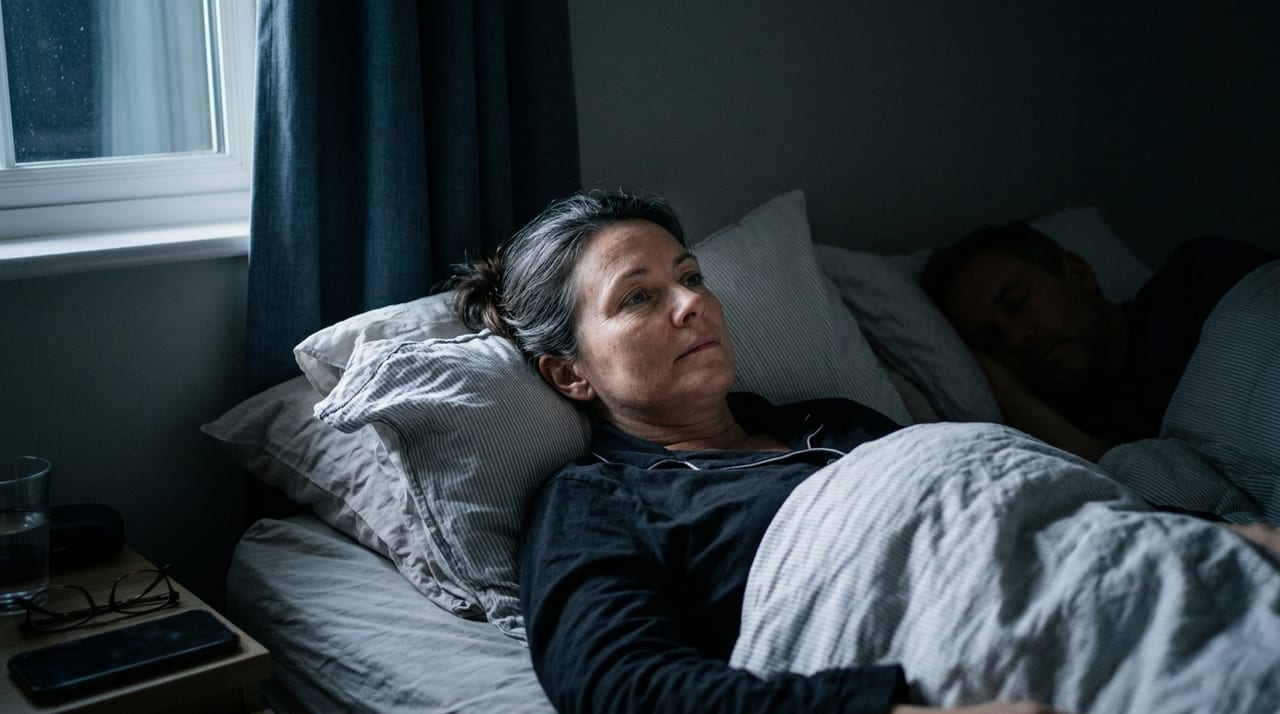
- Treats the hot flashes and night sweats that wreck your sleep — and bad sleep drives weight gain through cortisol, hunger hormones, and the simple fact that you don't have energy to move.
- Calms the mood swings, anxiety, and irritability that fuel stress eating and the 9 PM ice cream run.
- Eases the joint aches that quietly stop a lot of women from exercising.
- Slightly slows the belly-fat shift in long-term studies.
None of that burns calories directly. HRT isn't a weight-loss drug. It's a tool that clears the obstacles in your way.
What actually changes in midlife (and why the scale lies)

Two different things happen at the same time. They're not the same thing.
Aging weight gain happens to everyone. The Study of Women's Health Across the Nation (SWAN) found women gain about 1 to 2 pounds a year in midlife — and men the same age gain about the same. It's mostly muscle being replaced by fat, plus a slightly slower metabolism.
Menopause body-shape shift is mostly about where the fat goes, not how much. Estrogen helps keep fat parked on your hips and thighs. As estrogen drops, fat moves toward your belly — especially the deep, organ-hugging kind called visceral fat. Your waist thickens. Your hips slim. The scale stays the same. But your jeans don't.
| What changes in menopause | Why it happens | Roughly how much |
|---|---|---|
| Total body weight | Aging, not menopause directly | ~1–2 lbs/yr (same as men) |
| Muscle mass | Aging muscle loss + estrogen drop | ~3–8% loss per decade after 40 |
| Visceral fat (deep belly) | Estrogen redistributes fat | ~10–20% increase after menopause |
| Hip and thigh fat | Estrogen redistributes fat | Slight decrease |
| Waist size | Belly fat up + hip fat down | Often ~1–2 inches even at the same weight |
| Resting calorie burn | Less muscle = slower metabolism | ~50–100 fewer calories/day |
"The scale is the wrong measurement. Most women in midlife are losing muscle and gaining belly fat at roughly the same rate. The number stays the same. The shape changes. And the health risk goes up."
What HRT does — and doesn't — do for body shape
The clearest evidence comes from long-term follow-up of the WHI study plus several smaller trials. Pulling the numbers together:
- Total weight: no difference between HRT and placebo over 3 to 6 years.
- Belly fat: slightly lower on HRT in some studies. Not dramatic, but consistent.
- Muscle: slightly more preserved on HRT in some trials — especially when paired with strength training.
- Waist-to-hip ratio: a little better on HRT.
The 2022 NAMS Position Statement spells this out and is clear: don't start HRT to lose weight. But if you're starting it for symptoms, you can reasonably expect a small body-shape benefit on top.
One thing worth flagging: oral progesterone makes some women retain a little fluid and feel breast fullness, especially in the first 2 to 6 weeks. That shows up on the scale, but it isn't fat. It usually settles. Some women report a slight appetite bump on combo HRT. Others report less. It varies.
The sleep, cortisol, and cravings loop
This is where HRT genuinely helps your weight — not by burning calories, but by removing the symptoms that drive overeating and stop you from moving.
- Hot flashes wake you up. Even half-wake-ups raise cortisol and bump up ghrelin (the hunger hormone) the next day. Treating night sweats with a through-the-skin estradiol patch usually restores sleep within 4 to 6 weeks.
- Bad sleep makes you crave sugar. Sleep-restriction studies show this consistently. Get sleep back, and the daily cravings spike eases.
- Bedtime oral progesterone doubles as a mild sleep aid through the calm-down molecule pathway. We unpack it in why progesterone is the secret to better sleep.
- Mood symptoms drive emotional eating. Treat the perimenopausal anxiety and irritability and the late-evening snack pattern often quiets down on its own.
- Joint pain stops you from moving. Achy joints are a real, often-missed menopause symptom. Many women get back to regular activity within 8 to 12 weeks of starting HRT.
Sleep, mood, and joint pain in the way?
Treat the symptoms first. A ClearedRx prescriber can have HRT shipped in 3 to 5 business days. From $39/mo ($19 first month).
Show Me My PlanWhat actually works for menopause weight gain
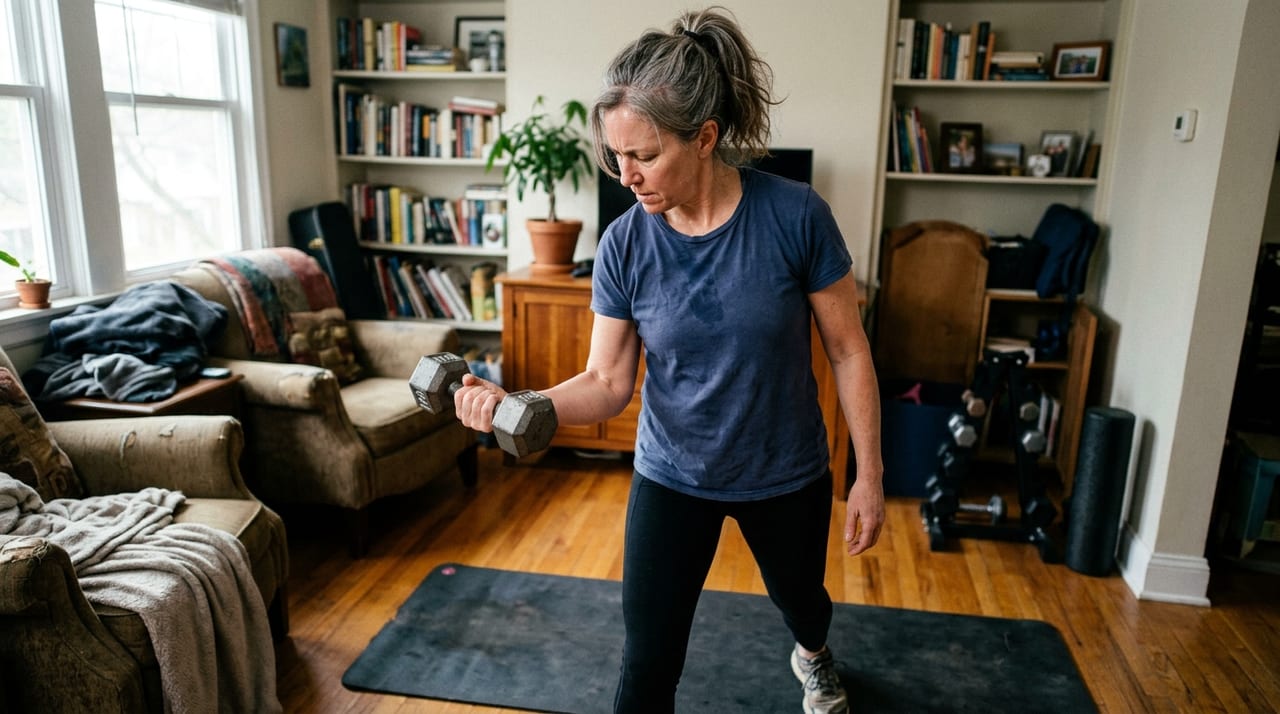
The interventions that move your body shape the most in midlife — bigger effects than HRT — are the ones that target the actual problem: muscle loss and belly fat. In order of impact:
- Strength train 2 to 3 times a week. The single biggest lever you have. It directly fights the muscle loss that's slowing your metabolism. Doesn't have to be a gym — bands, bodyweight, dumbbells in the living room all count. Mayo Clinic menopause guidance and the Endocrine Society both list strength training as the first lifestyle move.
- Eat more protein than you used to. Roughly 0.7 to 1 gram per pound of your goal body weight, every day. Higher protein protects muscle when you're cutting calories and keeps you full longer.
- Walk after dinner. Aim for 7,000 to 10,000 steps total. Total daily movement matters more than the 45-minute workout window for belly fat specifically.
- Eat 100 to 200 calories less than you did at 35. Less muscle = slower metabolism. What kept you steady at 35 will quietly add 3 pounds a year at 50.
- Cut back on wine. Alcohol calories stack up fast in midlife, and wine wrecks sleep and feeds night sweats. For many women, this is the single highest-yield diet change.
- Sleep first. Treat hot flashes with HRT or a non-hormonal option. If you're getting under 6 hours a night, every other lever you pull will be weaker.
- Manage stress. Chronically high cortisol drives belly fat. Therapy, meditation, time outside — all show small but real effects.
Strength training plus enough protein plus 7+ hours of sleep beats any prescription HRT regimen for body shape. HRT clears the obstacles. Lifestyle does the actual work.
Where weight-loss meds fit
GLP-1 meds (semaglutide, tirzepatide) and older weight-loss drugs (phentermine, naltrexone-bupropion) haven't been studied specifically for menopause weight gain. But they work in midlife women on the same principles as in everyone else. They're a reasonable option when:
- You meet the standard criteria (BMI thresholds and other health conditions)
- You've plateaued on lifestyle changes
- You've already started HRT for the symptoms that need it
ClearedRx focuses on HRT. We don't prescribe weight-loss meds. If you want one, you'll need a separate provider — most major telehealth platforms cover this.
What not to do
Skip the supplements. Menopause weight-loss supplements (raspberry ketones, "menopause belly" formulas, "metabolism boosters") have no real evidence. Some are safe and useless. Some mess with HRT or other meds. Save the money for groceries that move the needle.
Also: don't slash calories to almost nothing (you'll lose muscle faster), don't go low-protein, don't cut out a whole food group without a medical reason, and don't panic about a 3-pound shift on the scale. Body shape changes on a 6- to 12-month timeline. Not week to week.
Common questions about menopause weight and HRT
Does HRT cause weight loss?
Not directly. The Women's Health Initiative found no real weight difference between women on HRT and women on placebo. What HRT does do: treat the symptoms — bad sleep, hot flashes, mood, joint pain — that drive overeating, sitting still, and belly fat. Indirect effect, not a direct mechanism.
Why do women gain weight in menopause?
The actual weight gain from menopause itself is small — about 1 to 2 pounds a year, same as men your age. What changes more is your shape. Muscle drops. Fat shifts from your hips and thighs to your belly. Your waist thickens even when the scale barely moves.
Does HRT prevent the menopause belly?
HRT slightly slows the body-shape shift. Several studies — including the WHI follow-up — found women on HRT had a little less belly fat and a slightly better waist-to-hip ratio than placebo at 3 to 6 years. The effect is real but small. Strength training and protein matter more.
What about GLP-1 meds for menopause weight gain?
Semaglutide and tirzepatide work for weight loss in trials, but they haven't been studied specifically in menopause weight gain. They're a reasonable option if you meet the standard criteria, especially when lifestyle has stalled. ClearedRx focuses on HRT; you'll need a separate provider for these.
What lifestyle changes actually work for menopause weight?
Strength training 2 to 3 times a week is the biggest lever — it directly fights the muscle loss that's slowing your metabolism. Protein at roughly 0.7 to 1 gram per pound of goal weight, daily walking, sleep, and cutting alcohol have the strongest evidence. Calorie needs are lower than they were in your 30s because muscle is lower.
Will I gain weight when I start HRT?
A small share of women retain a little fluid or feel breast fullness in the first 2 to 6 weeks. That can show up on the scale, but it's not fat. True fat gain from HRT has not been shown in trials. Most women's weight is the same or slightly better on HRT than off.
Sleep, mood, and joint pain blocking your fitness?
Treat the underlying menopause symptoms first. A ClearedRx prescriber will recommend the right HRT regimen for your history — and tell you the truth about what HRT does (and doesn't) do for weight.
Show Me My Plan