

Last reviewed May 10, 2026
Quick answer: Are hot flashes symptoms of cancer? Almost never on their own. Roughly 95 percent of new-onset hot flashes in women age 40 to 60 are perimenopause or menopause. About 5 percent point elsewhere — most often hyperthyroidism, anxiety, an SSRI side effect, alcohol, or hypoglycemia. The rare cancer pattern that genuinely qualifies as hot flashes symptoms of cancer is the lymphoma B-symptom triad described in the 2014 Cheson Lugano classification: drenching night sweats PLUS unintentional weight loss greater than 10 percent in 6 months PLUS persistent low-grade fever. Hot flashes without those other two findings are almost never cancer.
The 60-second version
The fear hits before the question
You wake up at 3:14 a.m. with the pillow damp and the back of your neck cold. Or you are mid-sentence in a meeting and a wave of heat rises from your sternum through your scalp, and you sit there hoping no one notices the flush. The first thing your phone hands you, in red letters, is the phrase hot flashes symptoms of cancer. The fourth result down — the one with no urgency to its headline — mentions perimenopause. Both are true. Neither is sufficient.
The fear in that moment is rational. It is also disproportionate to the math. About 80 percent of women experience hot flashes during the menopause transition, per the North American Menopause Society 2022 Hormone Therapy Position Statement, and that hormonal cause accounts for the great majority of new hot flashes in women age 40 to 60. The other 5 to 10 percent of cases — and a much higher fraction in women under 40 or in men — are the hot flashes not menopause situations: thyroid disease, an SSRI side effect, anxiety, alcohol metabolism, or rarely something else. The job of this article is to lay out those 9 alternate causes, ranked by how likely each is and what makes each likely, and to give you the actual cancer-pattern criteria so you can tell whether your particular constellation warrants a workup beyond a thyroid panel.
This is not the article that says "always see a doctor" and ends there (true, but uselessly vague). It is also not the article that says "probably menopause, ignore it" (also wrong, especially in the under-40 and male cases). Sudden hot flashes are a symptom with a most-likely answer (hormones), a meaningful minority of treatable answers (thyroid, anxiety, medications), and a small set of rare answers worth knowing about. The way out is a calm differential, not panic and not denial. The question — what causes hot flashes besides menopause — has a short, specific list, and that list is the rest of this article.

Most "hot flashes other causes" articles list 5 to 7 things vaguely
The framework below ranks the 9 non-menopause causes by clinical likelihood drawn from the NAMS 2022 differential-diagnosis appendix, the American College of Physicians' Internal Medicine textbook chapter on fevers and night sweats, the Endocrine Society guidance on neuroendocrine tumors, and the Cheson 2014 Lugano lymphoma criteria. For each cause we give the differentiating signs that distinguish it from menopausal vasomotor symptoms, the prevalence (for context), and the rule-out test. The ranking is by frequency of presentation, not by severity — because the most common alternate causes (thyroid, meds, anxiety) are also the most treatable, and the rare ones (carcinoid, pheo, lymphoma) are picked out by accompanying signs, not the hot flash itself.
The 95/5 rule — and why the 5 percent is worth ruling out
A few numbers up front so the rest of the article makes sense in context. The question of whether hot flashes symptoms of cancer represents a real risk has a numerator. The North American Menopause Society 2022 Hormone Therapy Position Statement reports that roughly 80 percent of women experience vasomotor symptoms during the menopause transition, with the typical onset between age 45 and 55. Among women in that age band who present with new hot flashes, perimenopause or menopause is the explanation in approximately 95 percent of cases. The remaining 5 percent break down approximately as follows in pooled internal-medicine cohorts: thyroid disease (the largest single chunk), medication side effects, anxiety and panic disorder, alcohol or food triggers, hypoglycemia, infection, and — the small minority — neuroendocrine tumors or lymphoma.
For women under 40, the math shifts. New-onset hot flashes in a woman under 40 raise the prior probability of premature ovarian insufficiency, thyroid disease, and medication side effects, and lower the prior probability of typical perimenopause. The Endocrine Society recommends a TSH plus free T4 plus FSH plus a medication review as the minimum first-pass workup in any woman under 40 with new-onset hot flashes. For men, hot flashes are not a normal symptom at any age and warrant a workup focused on medication side effects (including SSRIs, opioids, GnRH agonists), thyroid disease, and rarely neuroendocrine tumors. For women on stable HRT who develop new hot flashes, the right move is a regimen review rather than a cancer workup.
So the framing for the 9-cause list below: in the typical 40-to-60-year-old woman, the prior probability is overwhelmingly perimenopause. In every other patient — and in any patient where the symptom pattern doesn't match — the differential matters, and it is short.
The 9 non-menopause causes — ranked
Asked plainly: what causes hot flashes besides menopause? Here is the list, ranked by frequency of presentation in primary-care and internal-medicine cohorts, with the differentiating signs for each. The first three account for the vast majority of hot flashes other causes situations; the first four account for over 90 percent of the non-menopausal differential. Causes 7 through 9 are rare; they earn their spot on the list because they have a specific accompanying-symptom pattern that distinguishes them from typical menopausal vasomotor symptoms — not because sudden hot flashes alone make them likely.
Hyperthyroidism (overactive thyroid)
Excess circulating thyroid hormone speeds up basal metabolism and produces heat intolerance, sweating, a faster resting heart rate, and weight loss despite a normal or increased appetite. Graves disease is the most common adult cause; less commonly, toxic nodular goiter, thyroiditis, or excess thyroid-replacement dosing. Affects roughly 1 to 2 percent of women — far higher prevalence in the 40-to-60 age band than carcinoid or pheochromocytoma combined, which is why it sits at the top of this list.
Medication side effects
A long list of common medications produce hot-flash-like symptoms via different mechanisms — neurotransmitter modulation, vasodilation, hormone-axis suppression. The most common culprits: SSRIs and SNRIs (paroxetine, venlafaxine, fluoxetine — paradoxically the same class also used to treat menopausal hot flashes), opioids (during initiation or dose increase), niacin at prescription cholesterol-lowering doses, tamoxifen (in roughly 80 percent of users on the drug for breast cancer prevention or treatment), aromatase inhibitors (anastrozole, letrozole, exemestane), GnRH agonists (leuprolide, goserelin), calcium channel blockers (nifedipine especially), sildenafil and tadalafil, and corticosteroids in some patients. ACOG specifically calls out tamoxifen and aromatase inhibitors as predictable causes of treatment-induced vasomotor symptoms in women receiving breast cancer therapy.
Anxiety and panic disorder
Generalized anxiety disorder and panic attacks produce surges of sympathetic nervous-system activation that feel identical to a menopausal hot flash from the inside — sudden warmth, sweating, racing heart, often a sense of impending doom. Roughly 7 percent of women meet criteria for an anxiety disorder in any given year, and the overlap with the perimenopausal age band is substantial. Anxiety and perimenopause can also coexist — perimenopausal hormonal fluctuation lowers the threshold for panic in susceptible women, which is part of why HRT often improves anxiety in this group.
Alcohol and food triggers
Alcohol metabolism produces a vasodilator (acetaldehyde) that flushes the face, neck, and chest — particularly in people with the ALDH2 polymorphism common in East Asian populations, but to some degree in everyone. Spicy foods (capsaicin), histamine-rich foods (aged cheese, cured meats, red wine, fermented foods), monosodium glutamate, and sulfites in some wines all produce a flushing-and-sweating episode that is commonly mistaken for a hot flash. The flushing overlap is particularly tight: the same vasodilation that produces a menopausal flash also produces an alcohol or food flush.
Hypoglycemia (low blood sugar)
Hypoglycemia produces a sweating-and-shakiness-and-warmth episode that overlaps strongly with the hot flash phenotype, particularly the autonomic phase before the cognitive symptoms appear. The classic pattern: 2 to 4 hours after a meal or after a skipped meal, sometimes after intense exercise, accompanied by hunger and shakiness, relieved within 15 to 30 minutes by eating something with sugar. Most common in women with diabetes on insulin or sulfonylureas, but also seen in non-diabetics with reactive hypoglycemia or, rarely, an insulinoma.
Subclinical infection
Chronic low-grade infection — a smoldering urinary tract infection, a deep abscess, tuberculosis (especially in immigrants from high-prevalence regions or in immunocompromised patients), endocarditis, or HIV — produces fever and night sweats that overlap with the menopausal pattern. The key distinction is that infection-driven sweats are part of an evening-fever-and-sweat cycle (the temperature spikes in the late afternoon, the sweat clears it overnight) rather than the brief unprovoked flushing of perimenopause. ACP Internal Medicine guidance on fever of unknown origin specifically calls out occult infection as the most common cause when the fever and sweats persist beyond 3 weeks.
Lymphoma (especially non-Hodgkin and Hodgkin lymphomas)
Lymphoma is the cancer most commonly associated with night-sweat-pattern symptoms — and the only cancer the lay literature consistently links to hot flashes symptoms of cancer. But the lymphoma pattern is specific. The 2014 Lugano classification by Cheson and colleagues, the staging standard for both non-Hodgkin and Hodgkin lymphoma, defines the B-symptom triad as (1) drenching night sweats requiring a change of bedclothes, (2) unintentional weight loss greater than 10 percent of body weight in the 6 months prior, and (3) persistent fever above 38°C (100.4°F). B symptoms are present in roughly 25 percent of non-Hodgkin lymphoma cases and a higher fraction of Hodgkin cases at presentation. Critically: hot flashes alone, without weight loss and without persistent fever, are not the lymphoma pattern. Lymphoma is the right thing to think about when the triad is present, not when one element is.
Carcinoid syndrome
Carcinoid tumors are slow-growing neuroendocrine tumors that arise most often in the small bowel or appendix; the rarer ones secrete serotonin, histamine, and other vasoactive substances that produce a distinctive triad. Annual incidence is roughly 4 per 100,000 people — much rarer than the causes above. The Endocrine Society and NCCN Neuroendocrine Tumor guidelines describe the classic carcinoid syndrome as facial flushing PLUS secretory diarrhea PLUS wheezing or bronchospasm, sometimes with right-sided heart valve disease over time. The flushing of carcinoid syndrome is typically a prolonged purplish or violaceous facial flush, not the brief pink flush of menopause.
Pheochromocytoma
A pheochromocytoma is a catecholamine-secreting tumor of the adrenal medulla. Annual incidence is roughly 0.8 per 100,000 — so rare that the Endocrine Society guidelines recommend testing only in patients with the specific clinical pattern: episodic severe headache PLUS sweating PLUS palpitations PLUS markedly elevated or wildly fluctuating blood pressure. The hot flash of pheochromocytoma is part of an adrenergic surge — a sudden, dramatic episode of high blood pressure, pounding heart, headache, and drenching sweat — not the brief unprovoked flush of menopause.
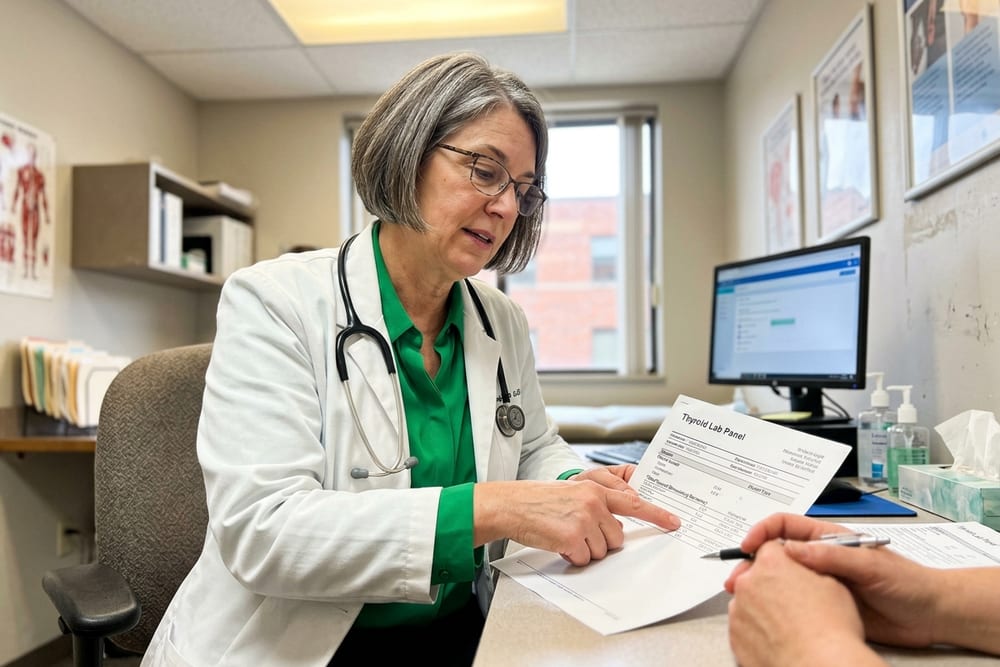
The cancer question — directly answered
This is the section the search query is really asking about. The phrase hot flashes symptoms of cancer drives a real volume of late-night anxious searching, and the honest answer requires three sentences, because the lay framing collapses a specific clinical pattern into a one-word fear.
Sentence one: isolated hot flashes — without weight loss, without persistent fever, without enlarged lymph nodes — are very rarely hot flashes symptoms of cancer. The pooled prior probability that a new isolated hot flash in a 40-to-60-year-old woman is malignancy-driven is well under 1 percent, and most of that signal comes from women already known to have a cancer (treatment-induced vasomotor symptoms from tamoxifen, aromatase inhibitors, or GnRH therapy).
Sentence two: the specific pattern that does warrant a cancer workup is the lymphoma B-symptom triad described in the 2014 Cheson Lugano classification: drenching night sweats requiring a change of bedclothes, plus unintentional weight loss greater than 10 percent of body weight in the prior 6 months, plus persistent fever above 38°C. The triad is what triggers the workup. A single drenching night sweat without weight loss and without fever is not the triad.
Sentence three: the rare neuroendocrine tumors that produce hot flashes — carcinoid and pheochromocytoma — have their own specific patterns (carcinoid: flushing plus diarrhea plus wheezing; pheo: episodic severe BP spikes plus pounding headache plus sweating). Those patterns are not produced by menopause. Hot flashes alone, in their typical pattern, are not produced by those tumors.
Practically: if your sudden hot flashes are isolated — uncomfortable but unaccompanied by weight loss, fever, lymphadenopathy, severe BP swings, or chronic diarrhea — the question of hot flashes symptoms of cancer resolves to a low probability, and the right next step is a TSH and a medication review, not a CT scan. If the B-symptom triad is present, or if a clinician examining you finds enlarged lymph nodes or unintentional weight loss, the workup escalates appropriately. The point of a differential is to do the right amount of testing, not the most testing.

When to see a doctor — a clear timeline
Plain English, by scenario:
- Woman age 45 to 55, hot flashes plus other typical perimenopausal symptoms (irregular periods, sleep disruption, mood changes), no red flags: a routine clinician visit at your convenience. The likely answer is perimenopause; a TSH at the visit catches the most common alternate cause. No urgency.
- Woman under 40 with new hot flashes: schedule a clinician visit within a few weeks. The minimum workup is TSH plus FSH plus a medication review; the differential includes premature ovarian insufficiency, thyroid disease, and medication side effects. Not an emergency, but not a wait-and-see.
- Man with new hot flashes at any age: schedule a clinician visit within a few weeks. The differential is medication side effects (especially SSRIs, opioids, GnRH agonists), thyroid disease, and rarely a neuroendocrine tumor. Hot flashes are not normal in men.
- Anyone with hot flashes PLUS unintentional weight loss greater than 10 percent in 6 months PLUS persistent low-grade fever: see a clinician within 1 to 2 weeks. This is the B-symptom triad and warrants a workup that includes a CBC, LDH, and likely imaging.
- Anyone with hot flashes PLUS episodic severe BP spikes PLUS pounding headache: see a clinician within 1 to 2 weeks. This is the pheochromocytoma pattern and warrants metanephrine testing.
- Anyone with hot flashes PLUS chronic secretory diarrhea PLUS wheezing: see a clinician within 1 to 2 weeks. This is the carcinoid pattern and warrants a 24-hour urinary 5-HIAA.
If your symptoms don't fit any of those buckets, the differential is overwhelmingly hormonal and the urgency is low. The point of the timeline is calibration, not alarm.
Why menopause is still the most likely answer
The 9 alternate causes above are real, but they are not the most likely thing happening to a 47-year-old woman with new hot flashes. NAMS data: approximately 80 percent of women in the menopause transition experience vasomotor symptoms; the typical onset is age 45 to 55; the typical duration is 7 to 10 years from first flash to last. Perimenopause is the prior, and the 9 causes above shift that prior only when their distinguishing features are present. This article is not pushing HRT. It is pushing the right diagnosis first — because once the diagnosis is correct, the treatment question is a different conversation.
If your workup ends back at perimenopause or menopause (which it will, in the most likely case), the relevant questions become: how disruptive are the symptoms, what other menopause-spectrum symptoms are present, what is the cardiovascular and bone-density picture, and what does the conversation about HRT look like for your specific risk profile. ClearedRx prescribes systemic and vaginal HRT after a clinician evaluation; we are not the first stop for a hot-flash workup, but for the conversation that often follows once perimenopause has been confirmed, we can help. Our companion piece on hot flashes and night sweats covers the full menopausal symptom picture; perimenopause vs menopause explains the staging; how long menopause lasts covers duration. For the broader picture, the Menopause Symptom Score takes 60 seconds and connects hot flashes to the rest of the symptom map.

"B symptoms — defined as fevers (temperature greater than 38°C), drenching night sweats, or unexplained weight loss of more than 10 percent of body weight over 6 months — are documented for staging purposes and have prognostic significance." — Cheson BD et al., Lugano Classification (Recommendations for Initial Evaluation, Staging, and Response Assessment of Hodgkin and Non-Hodgkin Lymphoma), Journal of Clinical Oncology, 2014
The honest bottom line
Are hot flashes symptoms of cancer? Almost never on their own. Roughly 95 percent of new-onset hot flashes in women age 40 to 60 are perimenopause or menopause, and the 5 percent that are hot flashes not menopause situations are most often eminently treatable — thyroid, anxiety, an SSRI side effect, alcohol, hypoglycemia. The rare cancer pattern is the lymphoma B-symptom triad: drenching sweats AND unintentional weight loss greater than 10 percent in 6 months AND persistent low-grade fever. Hot flashes without those other two findings are almost never cancer. The workup for an isolated hot flash is short — a TSH and a medication review — and it ends at perimenopause in most cases.
The reason to read this article carefully is not because hot flashes are dangerous. It is because the search engine framed the question as "cancer or nothing," and the honest answer is "neither, almost always." So when you type hot flashes symptoms of cancer at 3 a.m., the math is more reassuring than the search-results page suggested. A calm differential, the right test, and the right conversation get you to the right diagnosis faster than the spiral does. If you came here with the B-symptom triad — drenching sweats plus weight loss plus persistent fever — the workup is what closes the loop, and a 1-to-2-week timeline to a clinician is what you want.
Frequently asked questions
Are hot flashes always menopause?
No. Roughly 80 percent of women experience hot flashes during perimenopause or menopause, and that hormonal cause accounts for the great majority of new hot flashes in women age 40 to 60. But about 5 percent of new-onset hot flashes — especially in women under 40, men, or anyone whose symptoms don't match the menopausal pattern — point to another cause: thyroid disease, anxiety, medication side effects, or, rarely, a neuroendocrine tumor or lymphoma. The differential exists; menopause is the most likely answer, not the only one.
Can hot flashes be a sign of cancer?
The phrase hot flashes symptoms of cancer drives a lot of late-night searching, but hot flashes alone are very rarely cancer. The pattern that warrants a cancer workup is the lymphoma B-symptom triad described by Cheson and colleagues in the 2014 Lugano classification: drenching night sweats (soaking the bedclothes) PLUS unintentional weight loss greater than 10 percent of body weight in 6 months PLUS persistent low-grade fever. Hot flashes without those other two findings are almost never lymphoma. The much more common picture is a hormonal cause — perimenopause, hyperthyroidism, or an SSRI side effect.
What is the difference between menopause hot flashes and night sweats from lymphoma?
The clinical distinction is intensity, pattern, and accompanying symptoms. Menopausal night sweats are typically brief (1 to 5 minutes), bothersome but not soaking, and occur alongside other menopausal symptoms (irregular periods, vaginal dryness, mood changes). Lymphoma-pattern night sweats — the classic B symptom — are drenching: requiring a change of bedclothes, sometimes a change of sheets, occurring multiple nights per week, and accompanied by unintentional weight loss and persistent low-grade fever. The pattern matters more than any single episode.
Can thyroid problems cause hot flashes?
Yes. Hyperthyroidism — usually Graves disease in adults — produces a classic constellation of heat intolerance, sweating, racing heart (resting pulse over 100), tremor, and unintentional weight loss despite a normal or increased appetite. The Endocrine Society recommends a TSH plus free T4 as the first-line test in any adult with new-onset hot flashes that don't match the menopausal timeline, and a TSH alone in any woman 40 to 55 with hot flashes plus a tachycardia or weight loss.
Can anxiety cause hot flashes?
Yes. Panic attacks and generalized anxiety disorder can produce episodes that feel identical to a menopausal hot flash — sudden warmth, sweating, racing heart — but accompanied by chest tightness, racing thoughts, a sense of impending doom, or hyperventilation. The distinguishing feature: anxiety-driven episodes are typically triggered (a specific thought, a stressful conversation, a crowded space) and often relieved by leaving the situation, while menopausal hot flashes are unprovoked. SSRIs treat both — but the cause matters because the workup and broader plan differ.
What medications cause hot flashes?
The most common culprits: SSRIs and SNRIs (venlafaxine, paroxetine, fluoxetine — paradoxically, the same drug class also used to treat hot flashes), opioids (especially during initiation or dose increase), niacin (the prescription dose used for cholesterol), tamoxifen (in roughly 80 percent of users), aromatase inhibitors (anastrozole, letrozole), GnRH agonists (leuprolide), nifedipine and other calcium channel blockers, sildenafil and tadalafil, and any agent producing a niacin-like flush. Review your medication list with your prescriber before assuming menopause.
Should I see a doctor if I have hot flashes but I'm too young for menopause?
Yes. New-onset hot flashes in a woman under 40 warrant a workup because the differential shifts: premature ovarian insufficiency, thyroid disease, medication side effects, and rarely a neuroendocrine tumor become higher-likelihood causes than typical perimenopause. The minimum first-pass workup is a TSH, a complete blood count, a follicle-stimulating hormone level (to evaluate for early ovarian decline), and a medication review. Most workups land back on premature ovarian insufficiency or thyroid — the point is to confirm, not assume.
Can hot flashes be a sign of diabetes?
Hyperglycemia itself does not classically cause hot flashes, but hypoglycemia — low blood sugar — produces a sweating-and-shakiness episode that's commonly mistaken for one. The distinguishing pattern: hypoglycemic episodes occur 2 to 4 hours after meals or with skipped meals, are accompanied by hunger, shakiness, and sometimes confusion, and are relieved within 15 to 30 minutes by eating something with sugar. Women with diabetes on insulin or sulfonylureas are at the highest risk; in non-diabetics, recurrent hypoglycemia warrants endocrine workup.
What test rules out other causes of hot flashes?
There is no single rule-out test, but a reasonable first-pass panel for new-onset hot flashes outside the menopausal window includes: TSH and free T4 (thyroid), complete blood count (anemia, infection), comprehensive metabolic panel (glucose, kidney, liver), follicle-stimulating hormone (ovarian status), and a careful medication review. If B symptoms are present (drenching sweats plus weight loss plus persistent fever), add LDH, ESR or CRP, and refer for imaging per oncology guidance. Twenty-four-hour urinary 5-HIAA (carcinoid) and plasma metanephrines (pheochromocytoma) aren't first-line tests; they're added only if other features point to a neuroendocrine tumor.
Are hot flashes always serious?
No. The single most likely explanation for a new hot flash in a woman age 40 to 60 is perimenopause, which is uncomfortable but not dangerous. Even outside that window, the most common alternate causes (thyroid, anxiety, medications, alcohol, hypoglycemia) are eminently treatable and not life-threatening once identified. The serious causes — lymphoma, carcinoid, pheochromocytoma — are rare and almost always come with additional symptoms (weight loss, persistent fever, BP spikes, diarrhea) rather than appearing as isolated hot flashes. The honest summary: most hot flashes are not serious, and the workup is what tells you which group you're in.
Sources & references
- The North American Menopause Society. The 2022 Hormone Therapy Position Statement of The North American Menopause Society. Menopause. 2022;29(7):767-794. PMID: 35797481
- Cheson BD, Fisher RI, Barrington SF, et al. Recommendations for initial evaluation, staging, and response assessment of Hodgkin and non-Hodgkin lymphoma: the Lugano classification. J Clin Oncol. 2014;32(27):3059-3068. PMID: 25113753
- Ross DS, Burch HB, Cooper DS, et al. 2016 American Thyroid Association Guidelines for Diagnosis and Management of Hyperthyroidism and Other Causes of Thyrotoxicosis. Thyroid. 2016;26(10):1343-1421. PMID: 27521067
- Lenders JW, Duh QY, Eisenhofer G, et al. Pheochromocytoma and Paraganglioma: An Endocrine Society Clinical Practice Guideline. J Clin Endocrinol Metab. 2014;99(6):1915-1942. PMID: 24893135
- Strosberg JR, Halfdanarson TR, Bellizzi AM, et al. The North American Neuroendocrine Tumor Society Consensus Guidelines for Surveillance and Medical Management of Midgut Neuroendocrine Tumors. Pancreas. 2017;46(6):707-714. PMID: 28609357
- Mourits MJ, De Vries EG, Willemse PH, et al. Tamoxifen treatment and gynecologic side effects: a review. Obstet Gynecol. 2001;97(5 Pt 2):855-866. PMID: 11336760
- Mold JW, Holtzclaw BJ, McCarthy L. Night sweats: a systematic review of the literature. J Am Board Fam Med. 2012;25(6):878-893. PMID: 23136329
- American College of Physicians. MKSAP 19: Internal Medicine — General Internal Medicine, Approach to Fever and Sweats. Philadelphia: American College of Physicians; 2021.
- Internal: hot flashes & night sweats · perimenopause vs menopause · bleeding after menopause · how long menopause lasts · menopause statistics 2026 · menopause symptom score
After your workup confirms perimenopause, ClearedRx can help with the HRT piece
If your evaluation lands at perimenopause or menopause and HRT is the next conversation, ClearedRx prescribes systemic HRT and low-dose vaginal estrogen with 24-hour MD review. We don't replace your clinician for the workup — but for the HRT conversation that follows, we can help.
Find out if HRT is right for me