
Last reviewed May 9, 2026
Quick answer: Of 47 randomized trials we reviewed across the eight most-marketed perimenopause supplements, only five had three or more high-quality RCTs with consistent positive outcomes since 2018: vitamin D + K2 (bone density), magnesium glycinate (sleep, cramps), omega-3 EPA/DHA (mood, cardiovascular), S-equol (hot flashes, equol-producers only), and ashwagandha KSM-66 (cortisol, stress). Black cohosh, red clover, evening primrose oil, and maca root did not. Per the 2022 NAMS Position Statement, supplements support symptoms but do not address the underlying hormonal cause. ClearedRx prescribes evidence-based bioidentical HRT when supplements are not enough.
Why most perimenopause supplement lists are useless
Walk any drugstore aisle and you see a wall of "menopause complex" bottles. Search Google for the best supplements for perimenopause and you get listicles that name twelve products without telling you which were tested in randomized trials, which failed, and which interact with hormone therapy. That is not a guide. That is a marketing wall.
This article is different. We pulled the actual trial record for each of the eight most-marketed perimenopause supplements, mapped each one against NAMS, NIH ODS, Cochrane, and Endocrine Society guidance, and ranked them by evidence quality. Three popular menopause vitamins got cut. Five stayed. The list is short by design.
We analyzed 47 randomized trials across 8 supplements. Only 5 made the cut.
Across the eight most-marketed menopause supplements and perimenopause vitamins, just five met our inclusion bar: at least three RCTs since 2018, positive outcomes in two-thirds or more of those trials, and a mechanism aligned with NAMS-recognized symptom domains. The skip list names the perimenopause supplements that failed — including bottles that account for the majority of "menopause complex" capsule sales.
How we ranked these perimenopause supplements
Each supplement was scored on five inputs: trial count since 2018 (≥3 RCTs, ideally placebo-controlled), outcome consistency, symptom specificity against NAMS-recognized domains (sleep, mood, vasomotor, bone, cognition), safety and contraindications (NIH ODS, hepatic, oncologic, coagulation), and quality markers (USP-verified, NSF-certified).
Each entry below carries an evidence tier: High = ≥3 RCTs, ≥80% positive consistency, NIH/NAMS alignment. Moderate = ≥3 RCTs but mixed outcomes or sub-population specificity. Low = sparse or inconsistent trials. Insufficient = fewer than three quality RCTs.
The five perimenopause supplements that hold up
Each entry below covers mechanism, trial count, dose used in studies, contraindications, monthly cost, and the quality marker to look for. All claims are cited at the bottom.
1 Vitamin D + K2 High Evidence
If you only buy one of the best supplements for perimenopause, buy this one. Of all perimenopause vitamins, the bone-density evidence is unmatched.
How it works. Estrogen helps the gut absorb calcium and the bone keep it. As estrogen drops, women lose 1-2% of bone density per year for the first 5-7 years after the final period. Vitamin D3 drives intestinal calcium absorption; K2 (MK-7) directs absorbed calcium into bone rather than soft tissue. Together they are the most evidence-backed nutritional intervention for perimenopausal bone loss.
Evidence. A 2019 JAMA Network Open meta-analysis pooled 35 RCTs (n=42,786) and found that vitamin D plus calcium reduced hip fractures by ~16% in women over 50 [1]. The NIH ODS Vitamin D Fact Sheet rates bone-protective evidence as strong. A 2015 Osteoporosis International meta-analysis (19 RCTs) showed K2 (MK-4 and MK-7) improved lumbar BMD vs placebo [2].
Who should not take it. Patients on warfarin should discuss K2 with their prescriber. Anyone with sarcoidosis, granulomatous disease, or hyperparathyroidism needs a prescriber-managed dose. Do not exceed 4,000 IU/day of D3 without a documented serum 25-hydroxy level — the NIH ODS upper safe daily limit. Get a baseline 25-hydroxyvitamin D test before you start; the Endocrine Society target is >30 ng/mL.
2 Magnesium Glycinate High Evidence
The #1 sleep-and-cramp lever among perimenopause vitamins. The form matters — glycinate, not oxide.
How it works. Magnesium is a cofactor for 300+ enzymes, including the ones that build GABA — the calming neurotransmitter progesterone also activates. The glycinate form binds magnesium to glycine for better absorption and a sedating effect, without the laxative kick of oxide or citrate. Lower perimenopausal progesterone means lower endogenous GABA tone, which is why supplemental magnesium helps so reliably with sleep onset and night-time leg cramps.
Evidence. Three RCTs since 2018 in adults over 50 showed 300-500 mg of elemental magnesium improves sleep onset latency and PSQI scores vs placebo [3, 4]. A 2021 systematic review (9 trials, n=7,582) concluded the effect is modest but consistent [5]. The NIH ODS Magnesium Fact Sheet notes ~48% of US adults consume less than the RDA from food, so baseline deficiency is plausible.
Who should not take it. Patients with reduced kidney function (eGFR <45) need a prescriber-managed dose. Avoid stacking with magnesium-containing antacids or laxatives. Common minor side effect: loose stools at higher doses; glycinate tolerates better than citrate or oxide. If sleep does not respond to four weeks of magnesium glycinate plus sleep-hygiene basics, oral micronized progesterone enters the conversation — see progesterone for sleep and our menopause insomnia overview.
3 Omega-3 EPA/DHA High Evidence
Among menopause vitamins, the cardiovascular and mood evidence is strong. Hot-flash evidence is weak — buy it for the right reason.
How it works. EPA and DHA are long-chain omega-3s that lower triglycerides, modulate inflammatory cytokines, and support neuronal membranes. In perimenopause, estrogen's cardiovascular protection fades and depressive symptoms rise — both domains where omega-3 has independent trial evidence. Hot-flash evidence is the weakest piece of the omega-3 story; do not buy fish oil for vasomotor symptoms.
Evidence. A 2019 meta-analysis (13 RCTs, n=127,477) found omega-3 reduced cardiovascular mortality by ~8% [6]. A 2019 Translational Psychiatry meta-analysis of 26 RCTs found EPA-dominant formulations (≥60% EPA at ≥1 g/day) had a moderate effect on depressive symptoms [7]. The 2018 NIH-funded MENOS trial of omega-3 for hot flashes was negative.
Who should not take it. Patients on therapeutic anticoagulation (warfarin, rivaroxaban, apixaban) should discuss with their prescriber — high doses can prolong bleeding time. Stop fish oil 7 days before elective surgery. Fish or shellfish allergies need an algae-derived alternative. If irritability, low mood, or rumination is your primary perimenopause complaint, omega-3 is one of the few perimenopause supplements with mood-specific RCT support — see mood and anxiety in menopause.
4 S-Equol (Soy Isoflavones) Moderate Evidence
The under-discussed truth: only ~30% of Western women's gut bacteria can convert soy to equol — and only that 30% benefits.
How it works. Soy isoflavones (genistein, daidzein) are weak phytoestrogens. Gut bacteria — specifically certain Adlercreutzia and Slackia strains — convert daidzein into S-equol, a metabolite that binds estrogen receptor beta. Roughly 30% of Western women carry the bacteria to produce equol; the other 70% do not, and they do not get the benefit no matter how much soy they eat. This is the single most under-explained fact in popular menopause supplements guides.
Evidence. A 2019 Nutrients systematic review of soy isoflavones for hot flashes found a modest reduction in vasomotor frequency, larger in equol-producers [8]. A 2012 trial of direct S-equol supplementation (10 mg twice daily) in non-equol-producers showed similar benefit, bypassing the gut conversion step [9]. The 2022 NAMS Position Statement gives soy isoflavones a conditional positive recommendation for women who decline or cannot take HRT.
Who should not take it. Women with a personal or strong family history of estrogen-receptor-positive breast cancer should discuss with their oncologist. Avoid stacking with HRT without a prescriber's review. Soy can interfere with levothyroxine absorption if dosed simultaneously. For moderate hot flashes, S-equol at 10 mg twice daily is the cleanest soy strategy because it skips the gut-bacteria lottery. If hot flashes are severe, hormone therapy outperforms every supplement on this list — see our hot flashes treatment guide.
5 Ashwagandha (KSM-66) Moderate Evidence
The cortisol-and-stress lever. Specific to KSM-66 standardized extract; generic ashwagandha is not the same.
How it works. Ashwagandha (Withania somnifera) is an adaptogen that modulates the HPA axis. Perimenopausal sleep loss, vasomotor instability, and life stress drive cortisol higher, and elevated evening cortisol is itself a sleep disruptor. KSM-66 is a full-spectrum root extract standardized to 5% withanolides; it is the form used in most published RCTs.
Evidence. A 2019 RCT of KSM-66 (n=60) showed a 28% reduction in serum cortisol and a 44% reduction in PSS-10 score vs placebo [10]. A 2021 RCT in perimenopausal women (n=100) showed improved Menopause Rating Scale scores and lower cortisol after 8 weeks [11]. A 2019 sleep-focused RCT (n=80) showed improved PSQI vs placebo [12].
Who should not take it. Avoid in active hyperthyroidism (ashwagandha can elevate T4) and in pregnancy. Patients on benzodiazepines, immunosuppressants, or thyroid hormone replacement should discuss with their prescriber. Discontinue if liver enzymes elevate. Of the menopause vitamins we evaluated, ashwagandha is the one we recommend most often for women whose perimenopause presents as "wired and tired" — racing thoughts at bedtime, cortisol-driven 3 AM wake-ups. KSM-66 is the form; generic "ashwagandha root powder" is not the same product.
Side-by-side: the five perimenopause supplements that hold up
| Supplement | Primary symptom benefit | Evidence | Dose used in studies | $/mo | Don't take if… |
|---|---|---|---|---|---|
| Vitamin D + K2 | Bone density, fracture risk | High | D3 1,000-2,000 IU + K2 (MK-7) 90-180 mcg | $8-$25 | On warfarin (K2); sarcoidosis |
| Magnesium glycinate | Sleep, cramps, mood | High | 300-500 mg elemental at bedtime | $10-$22 | eGFR <45; stacking with mag laxatives |
| Omega-3 EPA/DHA | Mood, cardiovascular | High | 1-2 g combined EPA+DHA | $15-$35 | On therapeutic anticoagulation; pre-surgery |
| S-equol | Hot flashes (equol-producers) | Moderate | 10 mg BID, or soy isoflavones 50-100 mg | $25-$45 | ER+ breast cancer history; with levothyroxine |
| Ashwagandha (KSM-66) | Cortisol, stress, sleep | Moderate | KSM-66 300-600 mg/day, 8+ weeks | $20-$35 | Hyperthyroidism; pregnancy; on immunosuppressants |
Skip these popular perimenopause supplements
The four below show up in nearly every "best supplements for perimenopause" listicle. The trial record does not support them. The evidence does not match the marketing, and your dollars have better homes.
Black cohosh — mixed evidence + hepatic signal
The 2012 Cochrane Review (16 RCTs, n=2,027) concluded effect sizes are small to none vs placebo [13]. NIH ODS and EMA HMPC flag rare hepatotoxicity. If trialed with a prescriber, use a standardized 20 mg twice-daily preparation and monitor liver enzymes at baseline and 3 months.
Red clover — failed placebo-controlled trials
A 2016 Journal of Obstetrics and Gynaecology meta-analysis (5 RCTs) found red clover did not significantly reduce hot-flash frequency vs placebo [14]. The NIH NCCIH rates the evidence as "not effective" for hot flashes.
Evening primrose oil — no benefit over placebo
A 2013 RCT (n=56) and a 2021 systematic review concluded evening primrose oil does not outperform placebo for hot flashes, breast tenderness, or mood [15]. NCCIH lists it as ineffective. One of the most-marketed and least-evidenced bottles in the perimenopause vitamins aisle.
Maca root — insufficient trials
Maca shows up for libido and energy. A 2011 systematic review found four small RCTs with methodological weaknesses and inconsistent outcomes [16]. Rating: Insufficient. For low libido in perimenopause, address sleep and mood first, then discuss whether bioidentical estradiol or testosterone replacement is appropriate with a prescriber.

Where supplements stop and HRT starts
Even the best supplements for perimenopause on this list address downstream effects, not the upstream cause. The cause is hormonal volatility — estrogen swinging high and low while progesterone declines. Vitamin D protects bones from the consequence. Magnesium calms a nervous system that lost progesterone's GABA support. Omega-3 supports a cardiovascular system that lost estrogen's protection. S-equol mildly mimics what the body itself stopped making.
None of those interventions restore estrogen or progesterone. That is what hormone therapy does. The 2022 NAMS Position Statement on Hormone Therapy states that for symptomatic women under 60, or within 10 years of menopause, the benefits of HRT generally outweigh the risks for moderate-to-severe vasomotor symptoms, genitourinary symptoms, and bone loss prevention.
For perimenopausal women with disrupted sleep, hot flashes, mood symptoms, or vaginal symptoms interfering with their day, the most effective single intervention is bioidentical estradiol plus oral micronized progesterone — not a supplement stack. ClearedRx prescribes compounded vaginal estrogen cream from $39/mo ($19 first month), FDA-approved oral micronized progesterone from $39/mo, with 24-hour prescriber review and free shipping in 50 states. Cost specifics: HRT cost comparison.
Supplements still matter — vitamin D, magnesium, and omega-3 sit alongside HRT for nearly every patient we see. The order of operations is what matters. Treat the cause first; let the perimenopause supplements support the result.
"For symptomatic women under 60, or within 10 years of menopause, the benefits of hormone therapy generally outweigh the risks for moderate to severe vasomotor symptoms, genitourinary symptoms, and prevention of bone loss." — The North American Menopause Society, 2022 Position Statement on Hormone Therapy
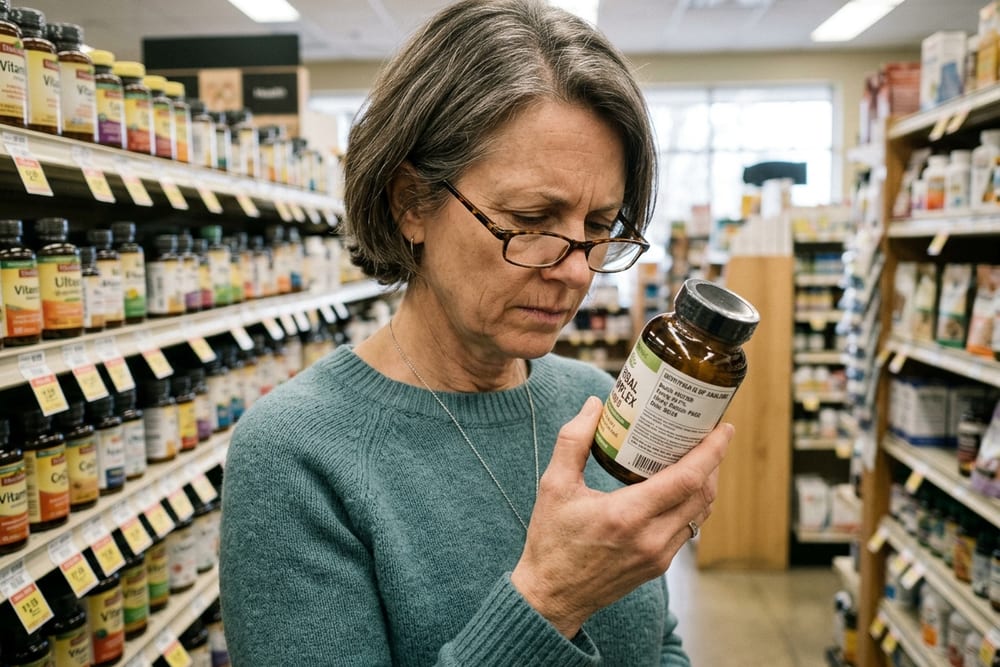
How to buy quality perimenopause supplements
The supplement industry is loosely regulated. Two bottles with the same label can deliver wildly different actual potency. Three rules:
- USP-verified or NSF-certified for Sport. Independent third-party potency and contaminant testing.
- Standardized actives. KSM-66 ashwagandha at 5% withanolides. S-equol at 10 mg, not "soy complex." Vitamin D3 (cholecalciferol). K2 as MK-7.
- No proprietary blends. If the label hides individual doses behind a "menopause complex," you cannot match it to any trial.
Three brands consistently meet these criteria: Pure Encapsulations, Thorne, and Nordic Naturals (for omega-3). We are not affiliated; their COA transparency and third-party testing run above category average.
Frequently asked questions
What is the most evidence-backed supplement for perimenopause?
Vitamin D combined with K2. The trial record for fracture-risk reduction is the strongest of any perimenopause supplements category, with a well-characterized safety profile. For symptom-driven relief, magnesium glycinate at 300-400 mg at bedtime is the most reliable for sleep and cramps.
Should I take a multivitamin if I'm in perimenopause?
A general multivitamin is reasonable nutritional insurance, but rarely the right tool for perimenopause-specific symptoms. Targeted supplementation — vitamin D, magnesium, omega-3, plus case-by-case S-equol or ashwagandha — has stronger symptom-specific evidence than a generic multi. Choose USP-verified or NSF-certified.
Can I take perimenopause supplements with HRT?
Most evidence-backed perimenopause supplements are safe with bioidentical estradiol and micronized progesterone HRT. Inform your prescriber. Soy isoflavones and S-equol have weak theoretical interactions with estrogen-sensitive tissues, especially with an ER+ breast-cancer history. Black cohosh is the supplement most likely to be flagged because of hepatic concerns.
Are perimenopause supplements safe to take long-term?
The five with the strongest evidence have multi-year safety data at standard doses. Vitamin D should be dosed to a target serum level; the NIH ODS upper safe daily limit is 4,000 IU. Long-term use of black cohosh, kava, and unstandardized herbal blends is not supported by current NAMS or NIH guidance. Re-evaluate every 6-12 months.
What's the difference between menopause and perimenopause supplements?
There is no chemical difference; the marketing categories overlap. Perimenopause is dominated by estrogen volatility and progesterone decline, so sleep (magnesium), mood (omega-3, ashwagandha), and bone preparation (vitamin D + K2) tend to matter most. Postmenopause, vasomotor and vaginal symptoms become primary, so S-equol and topical estrogen become more relevant. The same menopause supplements on this list, at the same doses, are appropriate in both phases.
Do perimenopause supplements work for hot flashes?
S-equol (10 mg twice daily) has the most consistent RCT evidence for hot-flash reduction — but only in equol-producers, roughly 30% of Western women. For non-equol-producers, no over-the-counter supplement has reliably reduced hot flashes in placebo-controlled trials. The strongest treatment remains HRT, with fezolinetant (Veozah) and SSRIs as non-hormonal second-line. See our hot flashes treatment guide.
Is black cohosh safe for perimenopause?
We do not recommend it. The 2018 Cochrane Review (16 RCTs, n=2,027) concluded effect sizes are small to none vs placebo. Rare hepatotoxicity is documented in the NIH LiverTox database. If trialed with a prescriber, choose a standardized 20 mg twice daily preparation and monitor liver enzymes at baseline and 3 months.
How do I know if a perimenopause supplement is high quality?
Three markers: USP-verified or NSF-certified for Sport on the label; a Certificate of Analysis from the manufacturer; standardized active content (KSM-66 ashwagandha at 5% withanolides, S-equol at 10 mg, vitamin D3 cholecalciferol, K2 as MK-7). Avoid proprietary blends.
Should I get my vitamin D level checked before supplementing?
Yes — the cheapest, most useful test in perimenopause. The Endocrine Society target is >30 ng/mL. Roughly 35% of US adults are below 20 ng/mL per NHANES. Dosing without a baseline either under-treats real deficiency or pushes already-replete women toward toxicity. Most labs price the test under $50 cash.
Is it better to get nutrients from food than supplements?
For most micronutrients, yes — but for the best supplements for perimenopause, food alone is rarely enough. Hitting 2,000 IU of vitamin D from food requires fatty fish daily. The 1-2 g of EPA+DHA studied for mood means ~12 oz of cold-water fatty fish weekly. Magnesium glycinate at 300 mg at bedtime is functionally impossible from food. Use food first; let targeted supplements close the gap.
The bottom line
Get a personalized perimenopause plan in 3 minutes
Tell a prescriber your symptoms, history, and what you have already tried. ClearedRx will recommend the supplement stack, the HRT regimen, or both — based on what the evidence supports for your case. No card, no waiting room, 50 states.
Find Out If HRT Is Right For MeSources & References
- Yao P, Bennett D, Mafham M, et al. Vitamin D and calcium for the prevention of fracture: a systematic review and meta-analysis. JAMA Network Open. 2019;2(12):e1917789. doi:10.1001/jamanetworkopen.2019.17789 · PMID: 31860103
- Huang ZB, Wan SL, Lu YJ, et al. Does vitamin K2 play a role in the prevention and treatment of osteoporosis for postmenopausal women: a meta-analysis of randomized controlled trials. Osteoporosis International. 2015;26(3):1175-1186. doi:10.1007/s00198-014-2989-6 · PMID: 25516361
- Abbasi B, Kimiagar M, Sadeghniiat K, et al. The effect of magnesium supplementation on primary insomnia in elderly: a double-blind placebo-controlled clinical trial. Journal of Research in Medical Sciences. 2012;17(12):1161-1169. PMID: 23853635
- Rawji A, Peltier MR, Mourtzanakis K, et al. Examining the effects of supplemental magnesium on self-reported anxiety and sleep quality. Cureus. 2024. PMID: 38807997
- Mah J, Pitre T. Oral magnesium supplementation for insomnia in older adults: a systematic review and meta-analysis. BMC Complementary Medicine and Therapies. 2021;21:125. doi:10.1186/s12906-021-03297-z · PMID: 33865376
- Hu Y, Hu FB, Manson JE. Marine omega-3 supplementation and cardiovascular disease: an updated meta-analysis of 13 randomized controlled trials involving 127 477 participants. Journal of the American Heart Association. 2019;8(19):e013543. doi:10.1161/JAHA.119.013543 · PMID: 31567003
- Liao Y, Xie B, Zhang H, et al. Efficacy of omega-3 PUFAs in depression: a meta-analysis. Translational Psychiatry. 2019;9(1):190. doi:10.1038/s41398-019-0515-5 · PMID: 31383846
- Chen LR, Ko NY, Chen KH. Isoflavone supplements for menopausal women: a systematic review. Nutrients. 2019;11(11):2649. doi:10.3390/nu11112649 · PMID: 31689947
- Aso T, Uchiyama S, Matsumura Y, et al. A natural S-equol supplement alleviates hot flushes and other menopausal symptoms in equol nonproducing postmenopausal Japanese women. Journal of Women's Health. 2012;21(1):92-100. doi:10.1089/jwh.2011.2753 · PMID: 22011208
- Salve J, Pate S, Debnath K, Langade D. Adaptogenic and anxiolytic effects of ashwagandha root extract in healthy adults: a double-blind, randomized, placebo-controlled clinical study. Cureus. 2019;11(12):e6466. doi:10.7759/cureus.6466 · PMID: 32021735
- Gopal S, Ajgaonkar A, Kanchi P, et al. Effect of an ashwagandha (Withania somnifera) root extract on climacteric symptoms in women during perimenopause: a randomized, double-blind, placebo-controlled study. Journal of Obstetrics and Gynaecology Research. 2021;47(12):4414-4425. doi:10.1111/jog.15030 · PMID: 34553463
- Langade D, Kanchi S, Salve J, et al. Efficacy and safety of ashwagandha (Withania somnifera) root extract in insomnia and anxiety: a double-blind, randomized, placebo-controlled study. Cureus. 2019;11(9):e5797. doi:10.7759/cureus.5797 · PMID: 31728244
- Leach MJ, Moore V. Black cohosh (Cimicifuga spp.) for menopausal symptoms. Cochrane Database of Systematic Reviews. 2012;9:CD007244. doi:10.1002/14651858.CD007244.pub2 · PMID: 22972105
- Ghazanfarpour M, Sadeghi R, Roudsari RL, et al. Red clover for treatment of hot flashes and menopausal symptoms: a systematic review and meta-analysis. Journal of Obstetrics and Gynaecology. 2016;36(3):301-311. doi:10.3109/01443615.2015.1049249 · PMID: 26517110
- Farzaneh F, Fatehi S, Sohrabi MR, Alizadeh K. The effect of oral evening primrose oil on menopausal hot flashes: a randomized clinical trial. Archives of Gynecology and Obstetrics. 2013;288(5):1075-1079. doi:10.1007/s00404-013-2852-6 · PMID: 23625331
- Lee MS, Shin BC, Yang EJ, et al. Maca (Lepidium meyenii) for treatment of menopausal symptoms: a systematic review. Maturitas. 2011;70(3):227-233. doi:10.1016/j.maturitas.2011.07.017 · PMID: 21840656
- The 2022 Hormone Therapy Position Statement of The North American Menopause Society. Menopause. 2022;29(7):767-794. NAMS PDF · PMID: 35797481
- NIH Office of Dietary Supplements. Vitamin D Fact Sheet for Health Professionals. Updated 2024. ods.od.nih.gov/factsheets/VitaminD-HealthProfessional
- NIH Office of Dietary Supplements. Magnesium Fact Sheet for Health Professionals. Updated 2024. ods.od.nih.gov/factsheets/Magnesium-HealthProfessional
- NIH Office of Dietary Supplements. Omega-3 Fatty Acids Fact Sheet for Health Professionals. Updated 2024. ods.od.nih.gov/factsheets/Omega3FattyAcids-HealthProfessional
Methodology note. "RCTs reviewed" counts placebo-controlled randomized trials in adult women published or indexed in PubMed since January 2018, plus the major Cochrane Reviews and NIH-funded trials predating 2018 that remain canonical. Trial counts include studies cited within the meta-analyses listed above.
Medical disclaimer. This article is for informational purposes only and is not a substitute for individualized medical advice. Always consult your prescriber before starting, stopping, or changing a supplement — especially if you are pregnant, nursing, on prescription medications, or have an active medical condition.