
Last reviewed May 10, 2026
Quick answer: Perimenopause anxiety has a different fingerprint than generalized anxiety. It came out of nowhere, spikes at 3 AM, has a catastrophic body component (racing heart, feels-like-dying), often cycles with the menstrual cycle, co-occurs with hot flashes, and often resists SSRIs alone. The mechanism is the GABA-progesterone axis — progesterone's metabolite allopregnanolone is a direct GABA-A receptor agonist; as progesterone tanks in perimenopause, GABAergic tone collapses and anxiety surges. Stabilizing hormones — especially bedtime bioidentical progesterone — often resolves perimenopause anxiety where therapy alone hasn't (Schmidt 2015; Soares 2010; Bitran 1991).
The 60-second version
If you're 46 and panicking at 3 AM with no prior anxiety history, this is for you
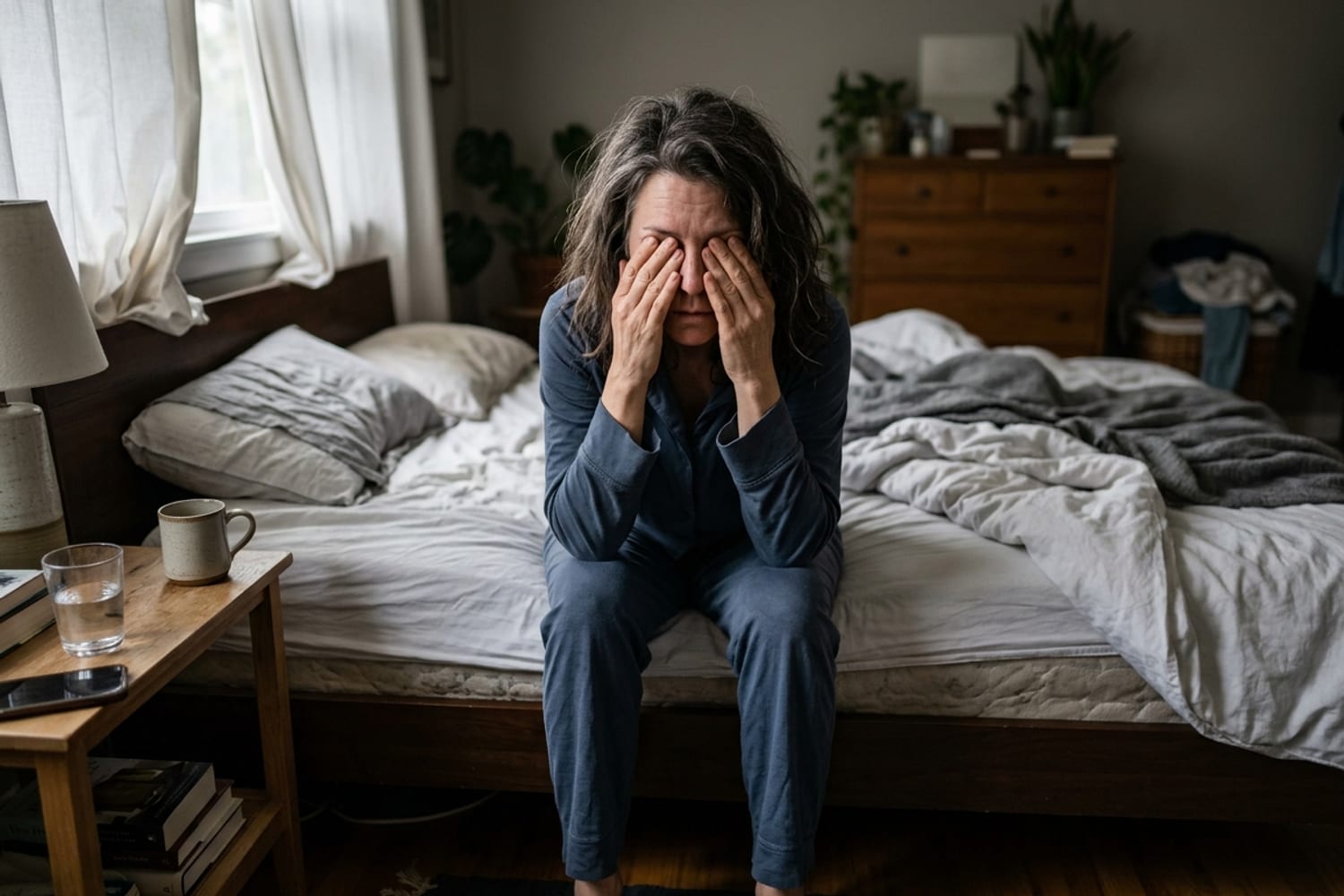
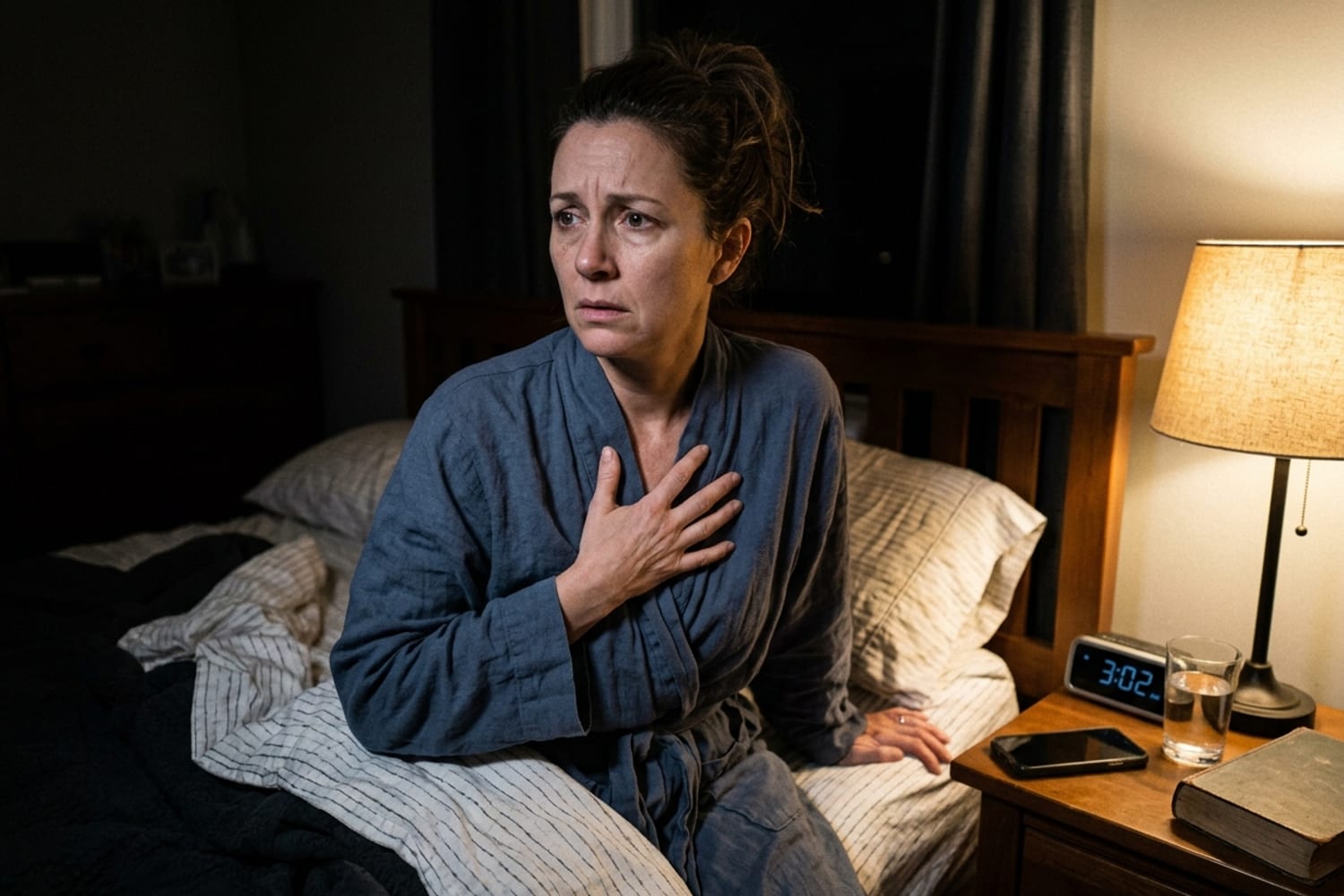
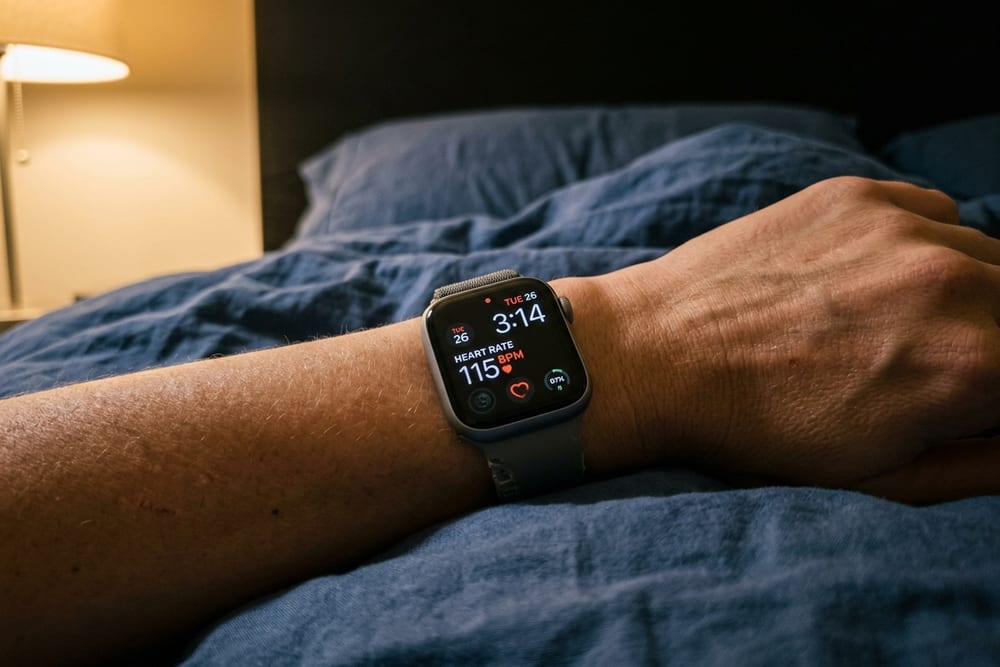
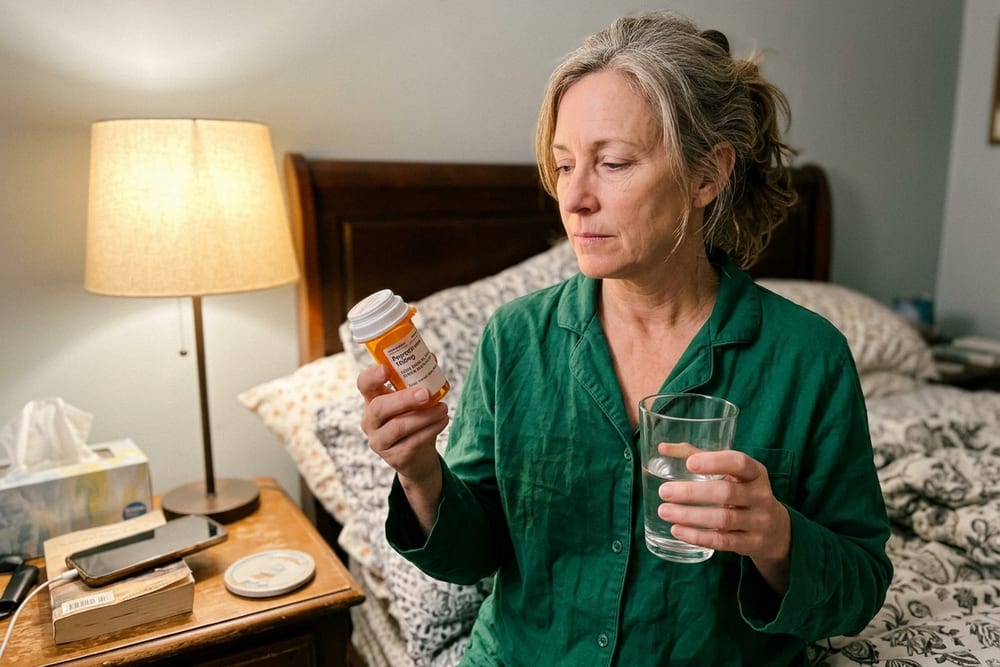
You're 46. You've never had anxiety in your life. You handled the bar exam, the divorce, the year your father was sick — none of it broke you. Then one Tuesday in your mid-40s, you wake up at 3:14 AM with your heart pounding so hard you can feel it in your throat. You can't breathe right. You feel certain something terrible is happening. By 3:30 it has passed and you're left lying there, soaked, wondering what the hell just happened. The next week it happens again. Then again. Then it starts happening during the day too — in line at Whole Foods, at the kid's school pickup, in the shower.
Your therapist says it's stress. Your GP looks at you for six minutes and writes a script for Xanax PRN. You take one once and it works, and you're scared of how much it works. You try meditation. You cut out coffee. You start running again. Some weeks are better. Some weeks you wake up four nights in a row. You are not crazy. You are not broken. You did not develop generalized anxiety disorder at 46 out of nowhere. You are in perimenopause, and what you are experiencing is a specific, mechanistically distinct anxiety syndrome that almost nobody is correctly diagnosing — including most of the clinicians you have already seen. Perimenopause anxiety has a different fingerprint than generalized anxiety, a different mechanism, and a different fix. This article is the part nobody told you.
Perimenopause anxiety is the GABA-progesterone axis collapsing — not your personality, not stress, not generalized anxiety with bad timing.
Progesterone is metabolized in the brain to allopregnanolone, a positive allosteric modulator of the GABA-A receptor — the same receptor benzodiazepines target. That's why progesterone is calming. As progesterone tanks in perimenopause (often years before estrogen does), allopregnanolone falls with it, GABAergic inhibitory tone drops, and the brain becomes hyperreactive. Bromberger's 2003 SWAN analysis and Cohen's 2006 Harvard Study of Moods and Cycles both showed perimenopausal women have a 2–3 fold increased risk of new-onset anxiety symptoms vs premenopausal age-matched controls. Schmidt 2015 in Endocrine Reviews documents the GABAergic mechanism in detail. Bitran 1991 in Brain Research is the seminal paper establishing allopregnanolone as a direct GABA-A agonist. Most clinicians treating midlife women with anxiety have never connected these papers.
Citations: Bromberger JT, et al. Psychologic distress and natural menopause: a multiethnic community study. Am J Public Health. 2003;93(9):1378-1385. PMID: 12826633 · Cohen LS, et al. Risk for new onset of depression during the menopausal transition: the Harvard Study of Moods and Cycles. Arch Gen Psychiatry. 2006;63(4):385-390. PMID: 16389202 · Schmidt PJ, et al. Reproductive hormones and the brain. Endocr Rev. 2015;36(3):373-407. PMID: 26006076 · Soares CN. Mood disorders during the menopausal transition. J Clin Psychiatry. 2010;71(8):e21. PMID: 20051219 · Bitran D, et al. Anxiolytic effect of progesterone is mediated by the neurosteroid allopregnanolone at brain GABA-A receptors. J Neuroendocrinol. 1991;3(4):403-409. PMID: 1652092.
The hormonal anxiety fingerprint — six distinguishing features
Perimenopause anxiety is not generalized anxiety with a perimenopausal timestamp. It has a distinct symptom shape. Once you see the fingerprint, you can recognize it in two minutes — and so can a clinician who knows what to look for. Most don't, which is why women in their 40s get told "this is just stress" or get handed an SSRI without the underlying biology being addressed. Here are the six features that distinguish perimenopause anxiety from generalized anxiety disorder. If four or more of these match your picture, hormonal stabilization belongs near the top of your treatment list.
1. Came out of nowhere in your 40s — no prior anxiety history
This is the most important single feature. If you handled high school, college, your first job, motherhood, marriage, divorce, layoffs, and grief without anxiety, and then in your mid-40s anxiety appeared without an obvious life-event trigger, the highest-prior-probability cause is hormonal. Generalized anxiety is usually lifelong or progressive — it shows up in your teens or twenties, sometimes worsens but rarely originates in midlife. New-onset anxiety in the 40s with no prior history is a perimenopause flag, not a personality emergence.
2. Spikes at night and 3 AM specifically
The 3 AM signature is so specific that clinicians who recognize perimenopause anxiety often diagnose it from this single feature. The mechanism is a four-hormone collision: progesterone (the GABAergic brake) is at its lowest, cortisol is starting its dawn rise around 3-4 AM, estrogen has dropped overnight, and body temperature is dropping — which can trigger a hot flash and a sympathetic-nervous-system surge against a GABA-deficient brain. Generalized anxiety is more typically constant low-grade worry, not punctuated by 3 AM panic awakenings.
3. Catastrophic body-feeling component, not just worry
Perimenopause anxiety is heavily somatic. Racing heart, chest tightness, feeling of impending doom, certainty that something is medically wrong — many women describe their first episodes as feeling certain they were having a heart attack or stroke. Generalized anxiety is more cognitive: chronic worry thoughts, rumination, what-ifs, mental looping. The hormonal kind is what your body is doing; the GAD kind is what your mind is doing. Both are real anxiety. They feel different from the inside and they respond differently to treatment.
4. Cycles with the menstrual cycle (when still cycling)
If you still have periods — even irregular ones — and you notice anxiety spikes in the week before your period and resolution after the period starts, that is a strong perimenopause-anxiety signal. The pre-period luteal phase is when progesterone (and therefore allopregnanolone) was already supposed to be peaking — but in perimenopause, the luteal phase becomes erratic and progesterone production stutters. The result: a pre-period anxiety surge that mirrors PMDD but is specifically perimenopausal in shape. Generalized anxiety doesn't cycle with hormones in this way.
5. Co-occurs with hot flashes or night sweats
If your anxiety symptoms cluster temporally with hot flashes, night sweats, or visible flushing, that is mechanistic clustering — both are downstream symptoms of the same hormonal volatility. The vasomotor cluster (hot flashes plus night sweats plus 3 AM awakening) is one of the cleanest signs you are dealing with a perimenopause-anxiety phenotype rather than primary generalized anxiety. See our companion piece on hot flashes and night sweats for the vasomotor mechanism in detail.
6. Often resistant to SSRIs alone until hormones are stabilized
This is the feature that ends up driving women through three SSRIs over two years before someone finally checks a hormone panel. SSRIs help mood and many help anxiety symptoms — but they do not directly restore GABAergic tone. If the underlying problem is allopregnanolone deficit, a serotonergic medication is treating downstream symptoms while the upstream driver remains. Many women describe partial relief on an SSRI ("it took the edge off") with the 3 AM awakenings continuing. Adding HRT — especially bedtime progesterone — frequently produces the second-stage improvement that the SSRI alone could not. In some women, hormonal stabilization alone fully resolves the anxiety and the SSRI becomes unnecessary.
Perimenopause anxiety vs generalized anxiety disorder — head-to-head
Side by side, the two syndromes look genuinely different once you have the right framework. The mistake clinicians make is reading the surface symptom — "anxiety" — and reaching for the same toolkit they use for GAD, which evolved to treat a different underlying biology. Here is the head-to-head comparison.
| Feature | Perimenopause anxiety | Generalized anxiety disorder (GAD) |
|---|---|---|
| Onset | Mid-40s, often abrupt; no prior history | Teens-20s usually; lifelong or progressive |
| Time signature | 3 AM panic awakenings; pre-period spikes | Constant low-grade worry; no diurnal pattern |
| Symptom flavor | Heavily somatic: racing heart, body sensations, feeling of dying | Heavily cognitive: worry thoughts, rumination, what-ifs |
| Cyclicity | Cycles with menstrual cycle; pre-period escalation | Stable across cycle |
| Co-occurring symptoms | Hot flashes, night sweats, sleep disruption, irregular periods | Often isolated or co-occurring with depression / OCD |
| Underlying biology | GABA-progesterone axis; estrogen volatility; sympathetic instability | Serotonergic / amygdala hyperactivity; HPA-axis dysregulation |
| SSRI response | Often partial; full response usually requires hormonal co-treatment | Strong response; first-line treatment |
| HRT response | Often dramatic, especially bedtime progesterone | Minimal direct effect |
| Time-limited? | Often resolves 1-3 yr post-menopause without treatment | Chronic without treatment |
The fingerprints are different and the treatments are different. GAD treatment that worked at 28 may fail at 46 because the underlying biology has changed. The clinical mistake is not "wrong drug" — it is "right drug for the wrong syndrome." Recognizing the perimenopause-anxiety phenotype is the diagnostic move that unlocks the correct sequence of interventions.
The mechanism: the GABA-progesterone axis
Here is the part nobody explains. The mechanism behind perimenopause anxiety is specific, has been worked out across multiple papers in Endocrine Reviews, Journal of Clinical Psychiatry, and Brain Research, and connects directly to why benzodiazepines work. The endpoint is the GABA-A receptor — the major inhibitory receptor system in the brain, the one responsible for damping down neuronal excitability, the one whose underactivation feels like anxiety.
Progesterone does something elegant. After it crosses the blood-brain barrier, it is metabolized by the brain enzyme 5α-reductase to allopregnanolone, a neurosteroid that is one of the most potent positive allosteric modulators of the GABA-A receptor known. Bitran et al.'s 1991 paper in Brain Research established the basic mechanism: allopregnanolone binds to the same general site benzodiazepines bind to, increases the receptor's affinity for GABA, and produces dose-dependent anxiolytic effects in animal models. In humans, the relationship is the same — progesterone supplementation raises serum and CSF allopregnanolone, which raises GABAergic tone, which reduces anxiety.
Now consider what happens in perimenopause. Progesterone is the first major hormone to drop. It begins falling in the late 30s and accelerates through the 40s as ovulation becomes irregular and luteal-phase progesterone production stutters. By the time a woman is in late perimenopause, progesterone may be running 30-70% lower than her premenopausal baseline, and the drop is erratic — high one cycle, low the next. Allopregnanolone tracks progesterone. As progesterone falls, allopregnanolone falls. As allopregnanolone falls, GABAergic inhibitory tone falls. As GABAergic inhibitory tone falls, the brain's intrinsic anxiety-damping mechanism weakens. Result: a brain that is more reactive, more easily triggered into the sympathetic-nervous-system response, more prone to 3 AM panic awakenings.
Schmidt et al.'s 2015 review in Endocrine Reviews went further — documenting that perimenopausal women have measurably altered GABA-A receptor sensitivity, blunted progesterone-allopregnanolone responses to stress, and elevated baseline cortisol relative to premenopausal age-matched controls. Soares (2010) in J Clin Psychiatry noted the clinical pattern: women with perimenopause anxiety often improve dramatically on bioidentical progesterone — even at modest oral doses (Prometrium 100-200 mg at bedtime) — suggesting the GABAergic deficit is the rate-limiting step. The Maki 2018 NAMS position statement on mood and cognition in menopause incorporates this mechanism into the treatment algorithm: hormonal stabilization belongs in the first-line consideration set for new-onset midlife anxiety, especially when SSRIs have not produced adequate response.
The clinical takeaway: perimenopause anxiety is not psychological, not "stress," not "you are getting older." It is a measurable change in receptor-level brain biology, mediated by a neurosteroid whose precursor (progesterone) is falling. Once you have the mechanism, the treatment options become obvious — and the order of operations becomes obvious too.

Why SSRIs alone often don't fully resolve perimenopause anxiety
SSRIs (selective serotonin reuptake inhibitors) — escitalopram (Lexapro), sertraline (Zoloft), paroxetine (Paxil) — are first-line for generalized anxiety disorder and major depression. They work by raising synaptic serotonin, which over weeks downregulates 5-HT receptors and dampens amygdala hyperactivity. They are excellent drugs for the right indication. They are also commonly prescribed in midlife women for "anxiety" without the underlying perimenopausal biology being checked.
Here is the clinical pattern many women describe. They start an SSRI. After 4-6 weeks, they notice partial improvement: the daytime baseline anxiety is lower, the constant low-grade dread has lifted somewhat. But the 3 AM awakenings continue. The pre-period spikes continue. The catastrophic body-feeling episodes continue, just slightly less often. They are described as a "partial response" or "non-response" and pushed to a higher dose, or switched to a second SSRI, or augmented with bupropion or buspirone. Two years later, they are on three medications, still having 3 AM panic awakenings, and starting to wonder if something else is going on.
The mechanistic explanation: SSRIs work on serotonin. Perimenopause anxiety is driven by GABA. They are different receptor systems with different inputs. Raising synaptic serotonin does not restore the allopregnanolone-driven GABAergic tone that fell with progesterone. The drug can only treat the part of the problem its mechanism addresses. For women with primary GAD plus a perimenopausal overlay, an SSRI plus HRT often produces the full response that neither produces alone. For women with pure perimenopause anxiety and no prior psychiatric history, hormonal stabilization (often progesterone first, then full HRT if symptoms persist) is mechanistically cleaner and the SSRI may not be needed at all. The decision belongs to a clinician who understands both axes.
What actually helps — ranked by evidence
The evidence-ranked hierarchy of interventions for perimenopause anxiety is shorter than the supplement aisle would suggest. Seven items make the list. The first targets the cause directly (and produces the most dramatic responses). The next three are systemic or pharmacologic. The last three are behavioral floor that compounds everything else.
1. Bioidentical progesterone (Prometrium) at bedtime — the most directly mechanistic option
If the underlying problem is the allopregnanolone-driven GABAergic deficit, the most directly mechanistic fix is to add back the precursor: oral micronized progesterone (Prometrium) 100-200 mg at bedtime. Prometrium is FDA-approved bioidentical progesterone. Taken orally, it is metabolized to allopregnanolone in the liver and brain, restores GABAergic tone, and many women describe a dramatic effect on the very first night. It is also sedating — that is the GABAergic action — which is why bedtime dosing is the norm. Schmidt 2015 documents this as a high-response intervention for perimenopausal mood and anxiety syndromes. The effect is often felt within days, not weeks. Note: oral micronized progesterone should be taken on a full stomach for best absorption and is contraindicated in women with active liver disease or known progesterone hypersensitivity. See our companion piece on progesterone for sleep for the related sleep mechanism.
2. Systemic HRT (estradiol + progesterone) — addresses the full hormonal driver
For women whose perimenopause anxiety clusters with hot flashes, night sweats, sleep disruption, and other vasomotor symptoms, full systemic HRT — transdermal estradiol patch or gel plus oral progesterone, or a compounded estrogen-and-progesterone body cream — addresses both the GABAergic deficit (via the progesterone component) and the estrogen-volatility-driven sympathetic instability at the same time. Most women see anxiety improvement within 4-8 weeks of HRT initiation, in parallel with hot flash and sleep improvement. Our companion piece on signs you need HRT walks through when this conversation is worth having.
3. SSRIs (especially escitalopram, paroxetine) — alone or combined with HRT
SSRIs remain first-line if there is overlapping depression, prior anxiety history, or no response to hormonal stabilization alone. Escitalopram (Lexapro) and paroxetine (Paxil) have the most consistent evidence in midlife women specifically. Paroxetine is also FDA-approved for vasomotor symptoms (under a different brand name and dose), giving it a dual-action utility. The combination of HRT plus a low-dose SSRI is a common and effective regimen for women with both a primary anxiety disorder and a perimenopausal overlay. The combination is generally well-tolerated and the two medications target different receptor systems without redundancy.
4. L-theanine + magnesium glycinate at bedtime
The strongest non-prescription combination. L-theanine (200 mg at bedtime) is an amino acid that increases GABA, glycine, and serotonin in animal models and produces measurable subjective calming in humans. Magnesium glycinate (200-400 mg at bedtime) is itself a GABA-A receptor positive modulator and the glycine moiety provides additional inhibitory tone. Stack effect is modest individually, additive in combination, and the side-effect profile is essentially zero. Useful as adjunct to hormonal or pharmacologic treatment, or as standalone for mild perimenopause anxiety.
5. Sleep optimization — the anxiety amplifier
Sleep deprivation is one of the most reliable anxiety amplifiers known. The 3 AM awakenings of perimenopause anxiety create a sleep deficit that compounds the next night's anxiety, which worsens the next night's awakening. Breaking the loop is a major intervention in itself. Cool bedroom (65-68°F to reduce hot-flash triggering), no screens after 10 PM, consistent wake time, and treating night sweats aggressively (HRT, moisture-wicking sleepwear, two layers of bedding for layered removal). On nights when sleep collapses, accept the cost and re-anchor the next day's wake time rather than oversleeping into the afternoon.
6. Trauma-informed CBT for any co-occurring component
Cognitive behavioral therapy (CBT) is excellent for the cognitive layer of any anxiety syndrome and is particularly useful when there is a co-occurring trauma history, a co-occurring depression, or persistent anticipatory anxiety about future episodes. CBT does not directly fix the GABA-progesterone axis, but it teaches skills that reduce the catastrophic-cognitive-loop response to body sensations — which can substantially reduce the secondary suffering of an episode. Trauma-informed CBT specifically (vs general CBT) is the right modality if there is a relevant trauma history.
7. Caffeine cutoff at 1 PM (stronger effect than baseline)
Caffeine sensitivity changes in perimenopause. Caffeine half-life is roughly 5-6 hours, but slowed hepatic clearance plus altered estrogen-mediated CYP1A2 activity means caffeine consumed after 1 PM may still be 30-50% bioactive at bedtime. This compounds the 3 AM awakening pattern. The 1 PM cutoff is stricter than the standard "no coffee after 3 PM" advice and the difference matters in perimenopause specifically. Decaf, herbal tea, and water are fine after 1 PM.
8. Don't miss: thyroid screening
Anxiety can also be a sign of subclinical hyperthyroidism (suppressed TSH, normal-to-high free T4), which is more common in midlife women and can mimic the perimenopause-anxiety presentation. If you have not had a TSH and free T4 in the last 12 months, get them. Low TSH plus high or high-normal free T4 changes the workup — the treatment is endocrinology, not hormone therapy. The lab is cheap and the rule-out is essential.
When perimenopause anxiety is actually something else — the rule-outs
Perimenopause anxiety is real and common, but isolated new-onset anxiety in a midlife woman warrants a workup before assuming hormones. Three causes are worth ruling out specifically:
- Hyperthyroidism. Suppressed TSH with elevated or high-normal free T4 produces an anxiety-mimicking syndrome — racing heart, sweating, tremor, sleep disruption, weight loss. Order TSH and free T4. If TSH is suppressed, refer to endocrinology before considering hormone therapy. Graves disease and toxic nodular goiter are the most common causes; both are treatable.
- Pheochromocytoma. A rare adrenal tumor producing catecholamine surges that look exactly like panic attacks — racing heart, sweating, headache, paroxysmal hypertension. Almost never the answer (incidence ~1 in 100,000), but worth screening if the panic episodes are dramatic, accompanied by markedly elevated blood pressure during episodes, or occur in the context of a personal or family history of pheochromocytoma or related syndromes (MEN2, neurofibromatosis, von Hippel-Lindau). Plasma metanephrines or 24-hour urine fractionated metanephrines is the screening test.
- Substance/medication-induced anxiety. Caffeine, stimulants (including ADHD medications and decongestants), alcohol withdrawal (including from previously moderate use), benzodiazepine withdrawal, cannabis withdrawal, and SSRI/SNRI activation in the first 2-4 weeks of starting all produce anxiety syndromes that mimic perimenopause anxiety. Take a full medication and substance inventory before assuming hormones.
The standard workup for new-onset midlife anxiety should include: complete medication and substance review, TSH and free T4, comprehensive metabolic panel, CBC, vitamin D, and a basic cardiac evaluation (12-lead ECG plus orthostatic vitals) if the panic episodes have a strong cardiac-feeling component. If that workup is clean and the symptom shape fits the perimenopause-anxiety fingerprint, the hormonal explanation becomes the working diagnosis and treatment can proceed.
Red flags that mean stop reading and call your doctor: chest pain that does not resolve in minutes, pressure or pain radiating to the jaw or arm, syncope (passing out), focal neurologic symptoms (face droop, weakness, vision change), or sudden severe headache unlike any you have had before. These are not perimenopause. They need same-day medical evaluation.
How ClearedRx prescribes HRT for perimenopause anxiety
ClearedRx is a doctor-supervised HRT service for women, online. You take a one-minute quiz. A licensed physician in our network reviews your symptoms and history within 24 hours. If you are a fit, they prescribe — and your treatment ships to your door, discreetly, the same week. We prescribe both compounded and FDA-approved HRT preparations; the patient picks based on cost, format preference, and clinical fit.
For perimenopause anxiety specifically, the preparation that matters most is bioidentical progesterone. Oral micronized progesterone (Prometrium 100-200 mg at bedtime) is FDA-approved, available as a generic, and produces the most directly mechanistic response for the GABA-progesterone axis. For women with co-occurring hot flashes or sleep disruption, full systemic HRT (transdermal estradiol patch or gel plus oral progesterone) is the natural extension. Our prescribers select the regimen based on your full picture: how heavily the anxiety dominates vs other symptoms, prior medication history, whether you still have a uterus, and personal preference between patch, gel, oral, and compounded cream formats.
Most women who add bedtime progesterone for perimenopause anxiety see improvement within 1-4 weeks — often on the first night or two for the sleep component, with full anxiety resolution settling over 4-8 weeks. ClearedRx HRT starts at $49 per month for compounded preparations and $89 per month for FDA-approved generics, all-in (medication, doctor reviews, free shipping in all 50 states). New patients receive 50% off their first month. There are no surprise fees and no insurance paperwork. For broader cost context, our HRT cost comparison walks through every formulation across every channel.

"Reproductive hormones, particularly progesterone and its neuroactive metabolite allopregnanolone, exert profound modulatory effects on GABAergic neurotransmission. The decline and increased variability of these neurosteroids during the menopausal transition contribute mechanistically to the heightened risk of mood and anxiety symptoms observed during this period — symptoms that often respond to hormone therapy in ways that conventional anxiolytics alone do not." — Schmidt PJ, Rubinow DR. Reproductive hormones and the brain. Endocr Rev. 2015;36(3):373-407.
If you also want to map the rest of the picture
Perimenopause anxiety almost never travels alone. The same low-and-erratic-progesterone-and-estrogen environment that drives the GABA-progesterone axis collapse typically also produces hot flashes, night sweats, sleep disruption, mood swings, rage, fatigue, and irregular periods on overlapping timelines. Mapping the constellation is the cheapest diagnostic move you can make. Our free Menopause Symptom Score is a 60-second self-check that scores the cluster as a single hormonal-fingerprint number, and our perimenopause self-check is a 10-question screen specifically targeted to where you are in the transition. For the broader symptom catalogue, see our menopause symptoms overview; for the closely-related mood symptoms, see our mood and anxiety in menopause hub. Sister-article context: our perimenopause rage piece covers the closely-related anger phenotype on the same hormonal axis, our perimenopause fatigue piece covers the energy depletion that often co-occurs, our 34 symptoms of perimenopause piece is the pillar overview of every symptom in the cluster, our perimenopause vs menopause piece walks through which symptom-stage maps to which treatment, our signs you need HRT piece walks through when the conversation is worth having, our progesterone for sleep piece covers the related GABAergic mechanism, and our menopause statistics 2026 page has the prevalence numbers across symptoms.
Frequently asked questions
Can perimenopause cause anxiety?
Yes. Perimenopause anxiety is one of the most common but most under-recognized symptoms of the menopausal transition. The Study of Women's Health Across the Nation (Bromberger 2003) and the Harvard Study of Moods and Cycles (Cohen 2006) both showed perimenopausal women have a 2-3 fold increased risk of new-onset anxiety symptoms compared with premenopausal age-matched controls. The mechanism is the GABA-progesterone axis — progesterone metabolites like allopregnanolone are direct GABA-A receptor agonists, and as progesterone tanks in perimenopause, GABAergic tone collapses, producing the anxiety surge. This is mechanistically distinct from generalized anxiety disorder.
Why do I have anxiety at 3 AM in perimenopause?
Three AM is the perimenopause-anxiety signature time stamp because of a four-hormone collision in early-morning hours. Progesterone (the GABAergic brake on anxiety) is at its lowest. Cortisol begins its dawn rise around 3-4 AM. Estrogen drops overnight. Body temperature is dropping, which can trigger a hot flash or night sweat that activates the sympathetic nervous system. The combination produces a sudden adrenergic surge against a GABA-deficient brain — and you wake convinced something is catastrophically wrong. This is not insomnia, anxiety, or panic in isolation; it is one mechanism producing all three. Generalized anxiety does not have this 3 AM signature.
Does HRT help perimenopause anxiety?
Frequently, yes. Bioidentical progesterone (Prometrium) at bedtime often produces the most dramatic improvement because it directly addresses the GABA-progesterone deficit through allopregnanolone — progesterone's GABAergic metabolite. Systemic HRT (estradiol + progesterone) addresses both the estrogen-volatility-driven sympathetic instability and the GABAergic deficit at the same time. Schmidt et al. (2015) in Endocrine Reviews and Soares (2010) in the Journal of Clinical Psychiatry both document HRT-responsive perimenopausal mood and anxiety syndromes that improve within 4-8 weeks of treatment initiation, often where SSRIs alone had failed.
What's the difference between perimenopause anxiety and GAD?
Generalized anxiety disorder is a lifelong or progressive cognitive worry pattern — chronic low-grade rumination, treatment-responsive to SSRIs and CBT regardless of cycle. Perimenopause anxiety came out of nowhere in your 40s, has a sudden 3 AM panic shape, is heavily somatic (body sensations like racing heart, chest tightness, feeling of impending doom) more than cognitive, often cycles with the menstrual cycle in pre-period spikes, co-occurs with hot flashes and night sweats, and is often resistant to SSRIs alone until hormones are stabilized. The fingerprints are different and the treatments are different — GAD treatment that works wonderfully at 28 may fail at 46 because the underlying biology has changed.
Does progesterone help anxiety?
Yes, often dramatically — and the mechanism is direct, not just calming. Progesterone is metabolized in the brain to allopregnanolone, a positive allosteric modulator of the GABA-A receptor (Bitran 1991, the seminal paper). That is the same receptor benzodiazepines target. Allopregnanolone is essentially an endogenous benzodiazepine. As progesterone falls in perimenopause, allopregnanolone falls with it, GABAergic inhibitory tone drops, and anxiety surges. Bioidentical progesterone supplementation, taken orally at bedtime, restores allopregnanolone — that is why women report it as 'sedating' or 'calming' and why it often resolves perimenopause anxiety where therapy alone hasn't.
Should I take an SSRI for perimenopause anxiety?
Sometimes — but the answer depends on the picture. SSRIs (especially escitalopram and paroxetine) are first-line for generalized anxiety and major depression and they help perimenopause anxiety too. But for hormonal anxiety driven by the GABA-progesterone axis, SSRIs alone often don't fully resolve it because they don't address the GABAergic deficit. The combination of HRT plus SSRI is sometimes the right answer, especially if there is an overlapping depression component. For pure perimenopause anxiety with no prior history of mental health treatment, starting with hormonal stabilization (progesterone first, then full HRT if needed) is mechanistically cleaner. The decision belongs to a clinician who knows your history.
Why do I suddenly have panic attacks in my 40s?
If panic attacks appeared for the first time in your mid-40s with no prior psychiatric history, the highest-prior-probability cause is perimenopause — specifically, the GABA-progesterone axis collapse plus estrogen volatility producing sympathetic instability. The Soares (2010) review in J Clin Psychiatry notes new-onset panic in the 40s is disproportionately a perimenopausal phenomenon. Other causes to rule out: hyperthyroidism (TSH suppressed), pheochromocytoma (rare adrenal tumor — almost never the answer but worth screening), substance/medication-induced anxiety (caffeine, stimulants, decongestants, withdrawal). Once those are ruled out, hormonal stabilization is the most direct fix.
Can perimenopause cause panic attacks?
Yes. Perimenopause panic attacks are a recognized clinical phenomenon and are mechanistically distinct from primary panic disorder. They typically present as: sudden 3 AM awakening with racing heart, chest tightness, feeling of dying or losing control, often co-occurring with a hot flash or night sweat, resolving within 5-15 minutes but leaving the person shaken. The trigger is the same GABA-progesterone-estrogen collision that drives the anxiety more broadly. Treatment is the same — hormonal stabilization first, with SSRI or as-needed benzodiazepine added if breakthrough panic is severe and clinician-supervised.
How long does perimenopause anxiety last?
It tracks the hormone-volatility window. Perimenopause itself averages 4-8 years; anxiety tends to be worst in late perimenopause when estrogen swings are sharpest and progesterone has dropped most steeply, then gradually settles in the year or two after the final menstrual period as hormones stabilize at a low baseline. For women who do not start HRT, anxiety typically resolves or improves substantially within 1-3 years of menopause onset. For women who start HRT — particularly bedtime progesterone — symptoms often improve within 4-8 weeks. The Maki 2018 NAMS position statement on mood and cognition in menopause documents this trajectory.
Will perimenopause anxiety go away after menopause?
Often yes, but not always. The hormone-volatility window closes after the final menstrual period, and the wild estrogen-progesterone swings that drive perimenopause anxiety stop. Many women describe a steady improvement starting around 12-24 months post-menopause. However, low estrogen post-menopause can independently produce anxiety in some women through different mechanisms (chronically reduced GABAergic tone, autonomic dysregulation, sleep disruption from hot flashes). For women whose anxiety persists post-menopause, ongoing HRT is often the most effective treatment. For women whose anxiety resolves naturally, no further treatment is needed.
Sources & references
- Bromberger JT, Meyer PM, Kravitz HM, et al. Psychologic distress and natural menopause: a multiethnic community study. Am J Public Health. 2003;93(9):1378-1385. PMID: 12826633
- Cohen LS, Soares CN, Vitonis AF, Otto MW, Harlow BL. Risk for new onset of depression during the menopausal transition: the Harvard Study of Moods and Cycles. Arch Gen Psychiatry. 2006;63(4):385-390. PMID: 16389202
- Schmidt PJ, Rubinow DR. Reproductive hormones and the brain. Endocr Rev. 2015;36(3):373-407. PMID: 26006076
- Soares CN. Mood disorders during the menopausal transition. J Clin Psychiatry. 2010;71(8):e21. PMID: 20051219
- Maki PM, Kornstein SG, Joffe H, et al. Guidelines for the evaluation and treatment of perimenopausal depression: summary and recommendations. Menopause. 2018;25(10):1069-1085. PMID: 30179986
- Bitran D, Hilvers RJ, Kellogg CK. Anxiolytic effect of progesterone is mediated by the neurosteroid allopregnanolone at brain GABA-A receptors. J Neuroendocrinol. 1991;3(4):403-409. PMID: 1652092
- The North American Menopause Society. The 2022 Hormone Therapy Position Statement of The North American Menopause Society. Menopause. 2022;29(7):767-794. PMID: 35797481
- Endocrine Society. Menopause and Hormone Therapy Clinical Practice Guideline (2024 update). endocrine.org
- Internal: menopause symptoms overview · mood and anxiety in menopause · hot flashes and night sweats · menopause statistics 2026 · menopause symptom score tool · perimenopause self-check · perimenopause rage · perimenopause fatigue · 34 symptoms of perimenopause · perimenopause vs menopause · signs you need HRT · progesterone for sleep
If you want to address the cause and not just the symptom — talk to a clinician
ClearedRx prescribes evidence-based HRT — bioidentical progesterone, estradiol, or a combined cream — based on your full picture, with 24-hour MD review and free shipping in all 50 states. Compounded preparations from $49/month, FDA-approved generics from $89/month. No insurance hassle. New patients save 50% on the first month.
Find out if HRT is right for me