
Last reviewed May 10, 2026
Quick answer: What are the 34 symptoms of perimenopause? They're the ~34 distinct effects of erratic estrogen and progesterone fluctuation across the body, grouped here into seven body-system clusters: vasomotor (4), mood/cognitive (5), sleep (3), genitourinary (4), musculoskeletal (4), skin/hair (5), and metabolic/other (9). Most women experience 12-18 of them over the 4-8-year transition (Harlow 2012; Avis 2015 SWAN). Hot flashes, night sweats, sleep disruption, joint pain, and mood changes are the most common, each affecting 50-80% of women. We tagged every one of the 34 symptoms of perimenopause with a 4-tier HRT-response rating so you know which ones HRT actually helps.
The 60-second version
Most women are told it's "just hot flashes." It's not.
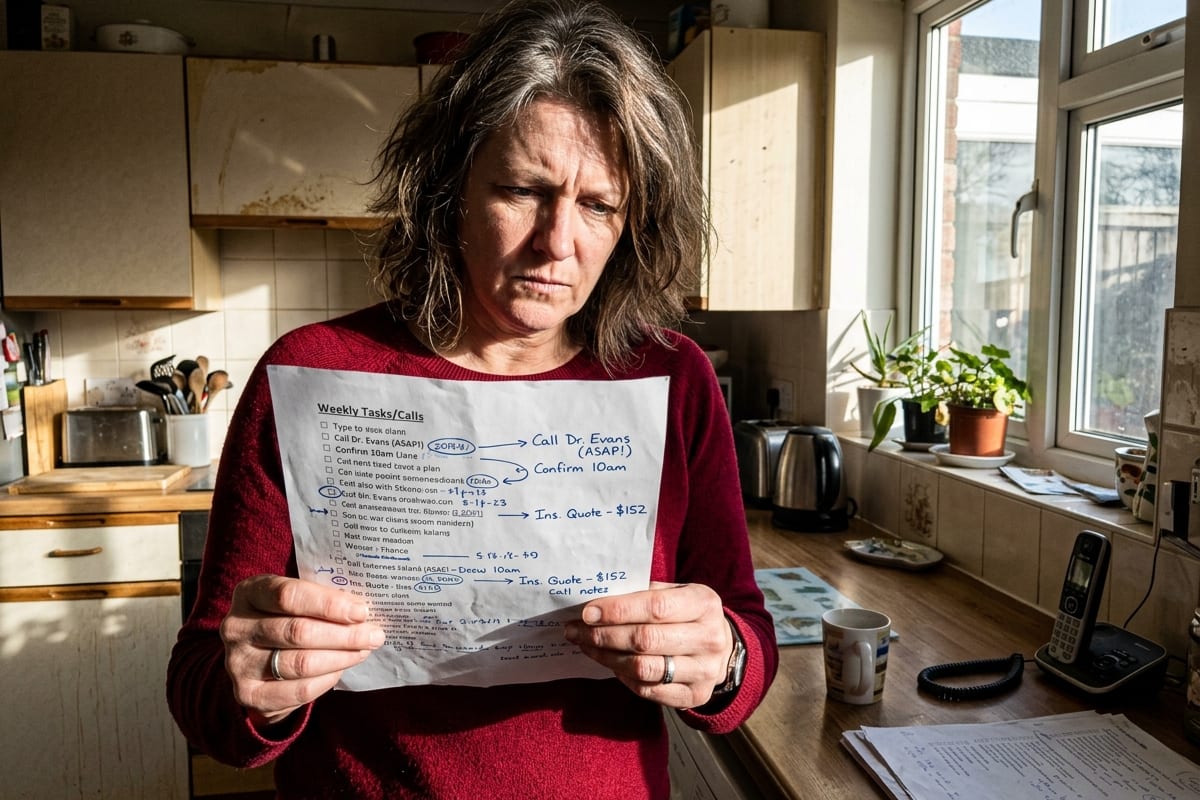
You're 47. You haven't slept a full night in eight months. Your knees hurt when you stand up from a chair. You snapped at your partner over loading the dishwasher and you haven't been able to stop crying about it for three days. Your hair is thinning at the crown. You forgot the name of your own dentist this morning. You feel a wave of heat at 2 p.m. and again at 9 p.m. and again at 3 a.m. There's a metallic taste in your mouth that you can't explain and a buzzing sensation in your left arm that comes and goes. You went to the doctor and got told it was probably stress, or thyroid, or anxiety, or "just getting older."
This article is the part nobody's giving you. What are the 34 symptoms of perimenopause? They're real, they're documented, they're measurable, and they're driven by one biological event: estrogen receptors in essentially every tissue in your body suddenly losing their reliable signal. The "34 symptoms of perimenopause" framing comes from decades of menopause-care literature — modern reviews don't enforce the exact number, but the breadth is absolutely real and the SEO term has stuck because it's the most accurate shorthand for what the transition actually does. Most women experience 12-18 of the 34 documented symptoms across the 4-to-8-year window. Some get fewer. Some get nearly all of them.
The differentiator in this article is not the list itself — you can find a list anywhere. It's the HRT-response rating we attached to each one. Most articles tell you about 34 symptoms without telling you which ones hormone therapy actually fixes, which ones it partially helps, and which ones it has no effect on. That's the part that determines whether HRT is worth the conversation for your specific symptom picture. Below: the 4-tier rating system, then the 34 symptoms grouped by body system, each one with a real prevalence number, the HRT tier, and links out to the deeper explainer on every symptom that has its own dedicated piece.
The 34 symptoms of perimenopause are not equally responsive to hormone therapy. We synthesized SWAN, NAMS 2022, and the Endocrine Society 2024 guideline to give each one a 4-tier rating.
Most "34 symptoms of perimenopause" articles list symptoms without telling you which ones HRT actually helps. That's the question that matters. We cross-referenced the SWAN cohort (Avis 2015), NAMS 2022 hormone-therapy position statement (PMID 35797481), the Endocrine Society 2024 guideline, Greendale 2009 cognitive findings (PMID 19470968), Lovejoy 2008 visceral fat data (PMID 18299179), and Davis 2012 weight findings to assign each of the 34 symptoms one of four ratings: Strong (≥50% symptom reduction in RCT data), Moderate (mechanistic plausibility + observational improvement), Weak (mixed or limited evidence), or None (HRT not the right tool).
Citations: Avis NE, et al. Duration of menopausal vasomotor symptoms. JAMA Intern Med. 2015. PMID: 25686030 · NAMS 2022 Hormone Therapy Position Statement. Menopause. 2022. PMID: 35797481 · Greendale GA, et al. Effects of the menopause transition on cognition. Neurology. 2009. PMID: 19470968 · Lovejoy JC, et al. Increased visceral fat and decreased energy expenditure during the menopausal transition. Int J Obes. 2008. PMID: 18299179.
The HRT-response tier system
Before the list, here's the 4-tier rating you'll see beside every symptom below. We synthesized this from the NAMS 2022 position statement, Endocrine Society 2024 guideline, the SWAN longitudinal cohort, and the trial-level data behind each individual symptom. The point is to let you scan the 34 symptoms of perimenopause and immediately see which ones HRT is worth having a conversation about, and which ones you should chase with other tools.
RCT-grade evidence
≥50% symptom reduction across multiple randomized trials. HRT is the first-line treatment.
Mechanistic + observational
Strong biology, consistent observational benefit, often reported clinically. RCTs support it indirectly.
Mixed or limited evidence
Some women improve, some don't. HRT may help if the symptom is hormonally driven, may not if it isn't.
Different mechanism
Symptom not primarily estrogen-driven. HRT isn't the right tool — different intervention required.
Two important caveats. First, the rating reflects the average evidence — individual women still vary. A symptom rated "Weak" may improve dramatically for you if your specific case is hormonally driven; a symptom rated "Strong" may not budge if there's something else going on. Second, "Strong" doesn't mean "instant." Most HRT-responsive symptoms take 4-12 weeks to settle, and some (bone density, GSM tissue health) take 3-6 months. Plan accordingly.
The 34 symptoms of perimenopause, by body system
The 34 symptoms cluster into seven body systems. We'll walk through each cluster with a one-paragraph intro on the underlying mechanism, then list every symptom in that cluster with prevalence, HRT tier, description, and a link to the deeper sister article when one exists. Most women have 12-18 of the 34 across two to four of these seven clusters; the specific cluster you're in tells you something about which interventions to consider first.
1. Vasomotor symptoms (4)
The thermoregulatory cluster. Estrogen modulates the hypothalamic thermoregulatory set point and the sympathetic-vasomotor axis. When estrogen drops, the brain mistakenly perceives the body as overheated and triggers a flush, sweat, and heart-rate spike. This is the most-studied symptom cluster — and the one HRT addresses most reliably. Avis 2015 SWAN data: vasomotor symptoms last a median of 7.4 years across the transition, with longer duration in African American women.
1. Hot flashes
The signature symptom. Sudden waves of heat starting in the chest and rising to the face, lasting 1-5 minutes, often with sweating and a racing heart. Mechanism: hypothalamic KNDy-neuron destabilization secondary to estrogen withdrawal. HRT reduces frequency by 70-90% in randomized trials. SSRIs and the new neurokinin-3 antagonist fezolinetant are evidence-based non-hormonal options. Deep dive: hot flashes & night sweats, treatment guide.
2. Night sweats
Hot flashes that occur during sleep, often waking you drenched at 3 a.m. and forcing a clothing or sheet change. The same mechanism as daytime hot flashes — but the sleep-disruption knock-on effect is what makes them disproportionately disabling. HRT response is identical to daytime hot flashes, and night-sweat resolution is usually the first downstream improvement women notice on HRT.
3. Heart palpitations
The sensation of a fluttering, pounding, or skipped heartbeat, often coinciding with hot flashes or anxiety spikes. Estrogen receptors are present in cardiac tissue and the autonomic nervous system; estrogen withdrawal increases sympathetic tone. Most cases are benign, but new palpitations always warrant a workup (TSH, ECG, sometimes Holter monitoring) before assuming hormones. HRT improves palpitations clinically when they cluster with vasomotor symptoms.
4. Dizziness
Lightheadedness, off-balance feeling, or true vertigo. Multiple mechanisms: blood-pressure swings, autonomic instability, inner-ear effects of estrogen withdrawal, and migraine-related vestibular symptoms. The HRT response is mixed — vasomotor-driven dizziness improves; vestibular dizziness often doesn't. Workup needed before assuming hormones: BP measurement standing/sitting, vestibular exam, TSH.
2. Mood and cognitive symptoms (5)
The neurological cluster. Estrogen modulates serotonin, dopamine, and acetylcholine signaling; receptors are dense in the hippocampus, prefrontal cortex, and amygdala. When estrogen fluctuates erratically, mood regulation, executive function, and memory all destabilize. Greendale 2009 SWAN data showed measurable cognitive decline during the perimenopausal transition that partially reverses postmenopause. The mood symptoms are the ones most often misdiagnosed as primary psychiatric disease.
5. Anxiety
Persistent worry, racing thoughts, physical tension — often new in midlife with no prior history. Driven by estrogen's effect on serotonin synthesis and GABA-receptor sensitivity. HRT helps when started in the perimenopausal window (the "timing hypothesis"); SSRIs/SNRIs are first-line if anxiety is severe. Deep dive: mood & anxiety in menopause.
6. Depression
Persistent low mood, loss of pleasure, fatigue, and disengagement that goes beyond normal sadness. Women with prior depression or PMDD are at higher risk during the perimenopausal transition. HRT shows benefit specifically for perimenopausal-onset depression in early-window patients (per the NIMH Schmidt trials), but established major depressive disorder needs a psychiatric workup, not just hormones.
7. Irritability and rage
Disproportionate frustration over minor stressors — the "perimenopause rage" pattern. Often the first symptom partners notice. Mechanistically tied to GABA-receptor changes and progesterone metabolite (allopregnanolone) destabilization. Frequently improves with progesterone or combined HRT, particularly when the rage clusters around the late-luteal phase of remaining cycles.
8. Brain fog
Word-finding difficulty, slower processing, "tip-of-tongue" failures, forgetting names of familiar people. Greendale 2009 (PMID 19470968) measured this objectively in SWAN. Largely reverses postmenopause. HRT evidence is mixed: helps when fog is downstream of sleep disruption (which HRT fixes); less consistent direct cognitive effect. Deep dive: brain fog.
9. Panic attacks
Sudden episodes of intense fear, racing heart, shortness of breath, chest tightness — often confused with cardiac events. The hormonal-volatility connection is real but causality runs both ways: panic can be unmasked or triggered by perimenopause but is usually a primary anxiety disorder needing CBT and/or SSRIs as first-line. HRT may reduce frequency when attacks cluster with hot flashes.
3. Sleep symptoms (3)
The sleep cluster. Sleep disruption is one of the highest-prevalence and highest-impact symptom clusters in perimenopause — partly driven by night sweats, partly by direct estrogen and progesterone effects on sleep architecture, and partly by the cascade of cortisol dysregulation that follows. NAMS data show 40-60% of perimenopausal women experience clinically meaningful sleep complaints, rising further in late perimenopause.
10. Insomnia (sleep onset)
Difficulty falling asleep at the start of the night. Driven by progesterone's loss of sedating effect (its metabolite allopregnanolone is a GABA agonist) and cortisol-rhythm disruption. Often improved dramatically by progesterone (oral micronized at bedtime). Deep dive: menopause insomnia, progesterone for sleep.
11. Fragmented sleep (3 a.m. wakings)
The classic 2-4 a.m. wake-up, often with a hot flash or anxiety spike. Falls into the "sleep-maintenance insomnia" category. HRT typically improves this faster than sleep-onset insomnia because it directly fixes the night-sweat trigger that's waking you. Most women on HRT report sleep improvement within 2-4 weeks.
12. Fatigue
The deep, can't-shake-it tiredness that's downstream of fragmented sleep, plus a direct estrogen effect on mitochondrial function and exercise tolerance. Often the symptom women cite as most disabling. Improves significantly when HRT restores sleep continuity. Workup also includes ferritin, TSH, vitamin D, and B12 to rule out non-hormonal contributors.

4. Genitourinary symptoms (4)
The GSM cluster — Genitourinary Syndrome of Menopause. The vaginal, vulvar, and lower urinary tract tissues are extremely estrogen-dependent. As estrogen drops, tissues thin, lubrication decreases, vaginal pH rises, and the urethra becomes more susceptible to irritation and infection. Unlike vasomotor symptoms, GSM tends to worsen over time without treatment rather than improve. Vaginal estrogen is the most reliably effective intervention in all of menopause medicine — close to 100% response rate.
13. Vaginal dryness
Loss of natural lubrication, tissue thinning, irritation. Vaginal estrogen (cream, tablet, or ring) is the gold-standard intervention with response approaching 100%. Systemic HRT helps but vaginal estrogen is faster and more localized. Deep dive: GSM overview, treatment options, natural remedies.
14. Painful sex (dyspareunia)
Pain with intercourse from tissue thinning, dryness, and decreased elasticity. Vaginal estrogen restores tissue health within 4-8 weeks; lubricants and moisturizers help bridge the gap. Often the most relationship-impacting symptom and one women under-report to clinicians. Don't.
15. Recurrent UTIs
The same tissue changes that cause dryness also alter the urethral and vaginal microbiome, increasing UTI risk. Vaginal estrogen reduces UTI frequency by 50-70% in randomized trials and is now first-line per AUA/ACOG guidelines for postmenopausal recurrent UTI. Often missed by primary care; ask specifically.
16. Urinary urgency and incontinence
The "I have to go right now" feeling, sometimes with leakage. Driven by urethral and bladder-trigone tissue thinning. Vaginal estrogen helps urgency more reliably than stress incontinence (which is often anatomical and may need pelvic-floor PT or pessary). Mixed-type incontinence often improves on a combined approach.
5. Musculoskeletal symptoms (4)
The joint-and-muscle cluster — under-recognized and under-treated. Estrogen receptors are present in cartilage, synovium, tendons, and skeletal muscle; estrogen withdrawal triggers measurable changes in joint inflammation, tendon elasticity, and lean muscle mass. SWAN data show that 50%+ of perimenopausal women report new joint pain. Most clinicians don't connect it to hormones — most patients hear "you're just getting older" or "early arthritis." Often it's neither.
17. Joint pain (arthralgia)
New aches in fingers, wrists, knees, hips — often symmetric, often worse in the morning. Distinct from rheumatoid arthritis (which it can mimic). Mechanism: estrogen-dependent cartilage homeostasis. WHI sub-analyses showed HRT reduced new-onset joint pain. Often the most overlooked of the 34 symptoms of perimenopause.
18. Muscle loss (sarcopenia)
Accelerated lean-mass loss starting in late perimenopause — measurable as decreased grip strength and slower stair climb. Estrogen has a permissive effect on muscle protein synthesis. HRT plus resistance training is more effective than either alone; HRT alone has weak direct effect. Resistance training 2-3×/week is the highest-leverage intervention.
19. Frozen shoulder (adhesive capsulitis)
Progressive shoulder pain and stiffness, often unilateral. Strong perimenopause association (Saltzman 2023): women in their late 40s and early 50s account for the majority of frozen shoulder cases. HRT shows protective effect in observational data. Deep dive: frozen shoulder & menopause.
20. Hip and back pain
Often a mix of estrogen-dependent musculoskeletal effects, accelerated bone-density loss, and altered body composition. Distinct from disc disease. HRT doesn't reliably fix it on its own; the strongest combined approach is HRT + resistance training + bone-density screening (DEXA).

6. Skin and hair symptoms (5)
The integumentary cluster. Estrogen drives collagen synthesis, sebum production, and hair-follicle cycling. As estrogen drops, skin thins (1% collagen loss per year in early postmenopause), sebum decreases, hair density declines, and small-fiber sensory neurons can become dysregulated. Some of the weirdest symptoms in the 34 — formication and electric shocks — sit in this cluster.
21. Itchy skin (pruritus)
Generalized or localized itch, often worse at night. Mechanism: estrogen-driven mast-cell stabilization and skin-barrier function decline. HRT helps when histamine-mediated; antihistamines and topical moisturizers help symptomatically. Deep dive: perimenopause itching.
22. Dry skin (xerosis)
Visible dryness, flaking, and reduced elasticity. Direct estrogen-collagen-sebum effect. Topical retinoids, ceramides, and HRT all contribute; combined approach beats any single intervention. Visible improvement on HRT typically takes 8-12 weeks.
23. Hair loss (perimenopausal alopecia)
Diffuse thinning at the crown and temples, slower regrowth, finer-diameter hairs. Driven by altered estrogen-to-androgen ratio. HRT alone is inconsistent; minoxidil 2-5% topical and ferritin/iron repletion have better evidence. Deep dive: perimenopause hair loss.
24. Brittle nails
Splitting, peeling, slower growth — same family of changes as hair and skin. Iron, biotin, and vitamin D status often contribute. HRT has weak direct effect; nutrient assessment and topical care are higher-leverage.
25. Formication (crawling-skin sensation)
The unmistakable sensation of insects crawling on or under the skin — completely real, no actual insects involved. Driven by estrogen-modulated small-fiber sensory neuron dysfunction. Often clusters with hot flashes. Improves with HRT in clinical case series. One of the most distressing of the weirder symptoms because patients often don't bring it up.
7. Metabolic and other symptoms (9)
The catch-all cluster — gut, breast, cycle, scent, neurological, and metabolic effects that don't fit the other six categories. Estrogen receptors in the gut, mammary tissue, central nervous system, and endocrine pancreas all destabilize during the transition, producing a wide and sometimes weird symptom set. This cluster contains the most "you're not making this up" symptoms women hear about for the first time.
26. Weight gain (visceral redistribution)
The "menopause belly" pattern: weight stays similar but redistributes from hips/thighs to abdominal visceral fat. Lovejoy 2008 (PMID 18299179) measured ~3 kg gain + visceral fat increase across the transition. HRT doesn't dramatically shift total weight but can favorably shift composition (less visceral, more peripheral). Resistance training + protein + sleep are higher-leverage. Deep dive: menopause belly, weight gain & HRT.
27. Bloating
Abdominal distension, often cyclical, often paradoxically worsened in early HRT (especially with synthetic progestins). Mechanism: gut motility changes, fluid retention, and estrogen-receptor effects on the GI tract. Often improves after the first 4-6 weeks of HRT once levels stabilize.
28. Digestive changes (nausea, reflux, altered habits)
Nausea (queasy mornings, post-meal sickness), reflux, and altered bowel habits. Estrogen modulates the vagal-5-HT3 pathway shared with pregnancy and chemotherapy nausea. HRT can stabilize the GI cluster when it's driven by hormonal volatility. Deep dive: perimenopause nausea.
29. Breast tenderness
Cyclic or non-cyclic breast soreness, swelling, and sensitivity. Driven by estrogen-dominant phases relative to progesterone. Often paradoxically increased in the first 2-3 months of starting HRT, then settles. New focal lumps always need a workup; diffuse cyclical tenderness is usually hormonal.
30. Irregular periods
The defining clinical sign of perimenopause. Cycles shorten, lengthen, skip, become heavy, become light. Combined HRT or low-dose oral contraception in earlier perimenopause regularizes cycles. Heavy or unpredictable bleeding always warrants gynecologic workup before assuming hormones. Deep dive: bleeding after menopause.
31. Headaches and migraines
Headache patterns shift in perimenopause: hormonal-pattern migraine sufferers often experience worsening, while some women with estrogen-withdrawal headaches improve on stable HRT. Transdermal estradiol is preferred over oral if migraine is hormonally driven (steadier delivery). Migraine with aura + HRT requires risk-benefit conversation due to stroke considerations.
32. Body odor changes
A real and surprising shift — sweat smells different, often sharper or more sulfuric, often worse with hot flashes. Driven by apocrine-gland output changes and altered skin microbiome. HRT helps when the change is downstream of vasomotor sweating. Most women never bring it up to a clinician; bring it up.
33. Electric shock sensations
Brief, sudden jolts under the skin — sometimes preceding a hot flash, sometimes random. Mechanism: estrogen-dependent small-fiber sensory neuron dysfunction. Improves on HRT in clinical case series. Disconcerting but benign; not typically caused by neurological pathology when it clusters with vasomotor symptoms.
34. Tingling extremities (paresthesia)
Numbness, tingling, or pins-and-needles in hands, feet, or arms. Multiple potential drivers: small-fiber sensory effects (hormonal), B12 deficiency, thyroid disease, carpal tunnel, peripheral neuropathy. Always work up the non-hormonal causes (B12, TSH, glucose, B6 if high-dose) before assuming perimenopause.
What you can do — the action framework
Reading the list is step one. Doing something useful with it is step two. Four-part action framework, from cheapest to most clinical:
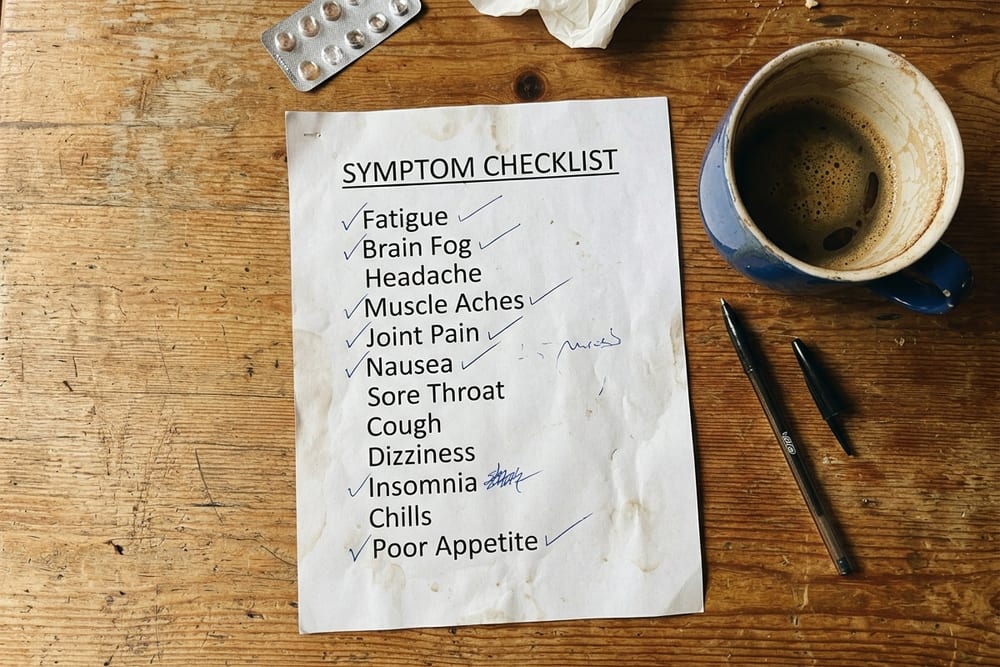
- Track your symptoms for 2-4 weeks. Print this article or use our menopause symptom score tool. Tick the symptoms you have. Note severity (1-10) and frequency. Patterns become obvious by week two — and that data is more useful than any six-minute clinic visit.
- Take the perimenopause self-check. Our 10-question perimenopause self-check maps your symptom cluster against staging criteria and gives you a directional read on where you are in the transition. Free, takes 60 seconds.
- Talk to a clinician. Bring the symptom checklist. Don't wait until you're miserable — earlier-window HRT initiation has better long-term evidence. Specifically ask: which of my symptoms are hormonal? Is HRT appropriate for me? What's the lowest-effective starting dose? See signs you need HRT for the full conversation framework.
- Match the intervention to the symptom. Vasomotor + GSM + irregular cycles → HRT is high-leverage. Sarcopenia + body composition → HRT plus resistance training. Hair/nails → nutrient workup + topical care. Mood when severe → consider SSRI/SNRI alongside HRT. The 34 symptoms aren't one problem with one solution.
The key piece most women miss: you don't have to wait until perimenopause is "bad enough" to address it. The end of perimenopause is years away once symptoms start, and the bone, cardiovascular, and brain-health considerations of HRT timing favor earlier rather than later initiation if you're a candidate. The duration overview walks through the full timeline.
How ClearedRx prescribes HRT for the 34 symptoms of perimenopause
ClearedRx is a doctor-supervised online HRT service. You take a one-minute quiz that captures which of the 34 symptoms of perimenopause you're experiencing, how severe each is, and your medical history. A licensed physician in our network reviews your case within 24 hours. If you're a candidate, they prescribe — and treatment ships to your door, discreetly, the same week. We prescribe both compounded and FDA-approved preparations; the patient picks based on cost, format preference, and clinical fit.
For the 34-symptom picture, the right HRT regimen depends on your specific cluster. Vasomotor-dominant pictures usually do best on transdermal estradiol (patch, gel, or compounded body cream) with progesterone if you have a uterus. GSM-dominant pictures often start with vaginal estrogen (cream, tablet, or ring) — the localized response is fast and the systemic absorption minimal. Mood-and-sleep-dominant pictures often benefit from oral micronized progesterone at bedtime (its allopregnanolone metabolite is sedating and anxiolytic). Most women need a combination tuned to the cluster, not a one-size-fits-all dose.
Time-to-effect by symptom: night sweats settle within 2-4 weeks for most women; sleep continuity within 2-6 weeks; daytime hot flashes 4-8 weeks; mood and brain fog 6-12 weeks; vaginal/GSM tissue changes 4-12 weeks on vaginal estrogen specifically; bone-density and joint changes 3-6 months. Cost: ClearedRx HRT starts at $49/month for compounded preparations and $89/month for FDA-approved generics, all-in (medication, MD reviews, free shipping in all 50 states), with 50% off your first month. Our HRT cost comparison walks through every formulation and channel.

"The menopausal transition affects multiple physiologic systems through estrogen receptor signaling. The clinical phenotype includes vasomotor, urogenital, musculoskeletal, neurocognitive, and cardiometabolic features, with substantial individual variation. Hormone therapy remains the most effective treatment for moderate-to-severe vasomotor and genitourinary symptoms." — The 2022 Hormone Therapy Position Statement of The North American Menopause Society. Menopause. 2022;29(7):767-794. PMID: 35797481.
If you also want to map the rest of the picture
The 34 symptoms of perimenopause never travel alone — the same hormonal volatility produces clusters that overlap and shift over time. Mapping the constellation is the cheapest diagnostic move you can make before deciding what to do next. Our free Menopause Symptom Score is a 60-second self-check that quantifies your cluster as a single hormonal-fingerprint number, and our perimenopause self-check screens specifically for transition staging. For broader context: perimenopause vs menopause walks through the staging, menopause statistics 2026 has cohort-level prevalence numbers, and the symptoms overview indexes every dedicated explainer. For the cluster sister-articles linked through the body of this list: hot flashes & night sweats, menopause insomnia, mood & anxiety, brain fog, GSM, frozen shoulder, hair loss, menopause belly, weight gain & HRT, itching, nausea, and bleeding.
Frequently asked questions
Are there really 34 symptoms of perimenopause?
The "34 symptoms of perimenopause" is a long-standing clinical and patient-education framing that comes from older menopause-care literature and has stuck because it captures the breadth of the transition better than the "just hot flashes" version. Modern reviews from NAMS and the Endocrine Society don't strictly enforce 34 — the actual number depends on how you split or lump (e.g., is "irritability" separate from "rage"?). What's well established is that the menopausal transition affects more than 30 distinct symptoms across vasomotor, mood, cognitive, sleep, genitourinary, musculoskeletal, skin, and metabolic systems, driven by estrogen receptors expressed in essentially every tissue.
What are the most common perimenopause symptoms?
The five most prevalent in the SWAN cohort (Avis 2015) and NAMS 2022 review are: hot flashes/night sweats (~75-80% of women), sleep disruption (~60%), mood changes including anxiety and irritability (~45-55%), joint pain (~50-60%), and brain fog (~40-60%). Vaginal dryness becomes increasingly prevalent as the transition progresses, affecting 50%+ of women within 3-5 years of the final menstrual period. See our hot flashes & night sweats page for the most-prevalent cluster.
What's the weirdest perimenopause symptom?
Three symptoms reliably surprise patients: formication (the sensation of insects crawling on or under the skin), electric shock sensations (brief jolts under the skin, often preceding a hot flash), and body odor changes (a real shift in apocrine-gland output that produces a sharper or more sulfuric scent). All three are mechanistically tied to estrogen's effect on the autonomic nervous system, sweat glands, and small-fiber sensory neurons. None are dangerous; all are documented. Women rarely bring them up to clinicians — bring them up.
Does everyone get all 34 perimenopause symptoms?
No. Most women experience 12-18 of the 34 documented symptoms over the course of the transition, with the specific cluster varying by genetics, BMI, race/ethnicity, smoking status, and surgical history. SWAN data show African American women experience longer and more severe vasomotor symptoms; East Asian women report fewer hot flashes but more joint complaints; women with surgical menopause typically experience a denser symptom cluster than women with natural menopause.
Which perimenopause symptoms does HRT help?
HRT has the strongest evidence for vasomotor symptoms (hot flashes/night sweats — 70-90% reduction), genitourinary symptoms (vaginal dryness, painful sex, recurrent UTIs — strong for vaginal estrogen specifically), sleep disruption when driven by night sweats, and bone density. Moderate evidence supports joint pain, mood changes when started in early perimenopause, and skin changes. Weaker evidence covers brain fog, hair loss, and body composition. See signs you need HRT for the conversation framework.
Can perimenopause symptoms come back after menopause?
Most vasomotor symptoms gradually resolve in the years after the final menstrual period, but the SWAN cohort (Avis 2015, PMID 25686030) showed a substantial minority of women experience hot flashes for 7+ years post-menopause, and roughly 10% experience them for 10+ years. Genitourinary symptoms (vaginal dryness, urinary urgency) tend to worsen rather than resolve in postmenopause because estrogen levels stay low. Joint pain and skin/hair changes also often persist or progress. This is why the conversation about HRT doesn't end at menopause.
When should I see a doctor about perimenopause symptoms?
Talk to a clinician if symptoms interfere with sleep, work, or relationships; if you're experiencing heavy or unpredictable bleeding; if mood changes feel like clinical depression; if you have new severe headaches or chest symptoms; or if you simply want to understand whether HRT is appropriate for you. You don't need to wait until symptoms are severe — earlier-window HRT initiation has stronger evidence for long-term cardiovascular and bone outcomes than late-start HRT.
Are perimenopause symptoms different from menopause symptoms?
Yes. Perimenopause is the transition window (typically late 30s to early 50s) when estrogen and progesterone fluctuate erratically before settling at a low postmenopausal baseline. Many perimenopause symptoms are driven by the volatility itself (mood swings, sleep disruption, cycle changes, breast tenderness). Postmenopause symptoms are driven by sustained low estrogen (vaginal atrophy, bone loss, sustained joint pain). Some symptoms — hot flashes, brain fog — span both. See our perimenopause vs menopause explainer.
Why does perimenopause cause so many symptoms?
Estrogen receptors are expressed in essentially every tissue in the body — brain, heart, vasculature, bone, joints, skin, gut, urogenital tract, breast, and immune system. When estrogen levels become unpredictable in perimenopause, every one of those systems experiences signaling disruption. That's why the same hormonal transition produces hot flashes (hypothalamic thermoregulation), joint pain (cartilage estrogen receptors), brain fog (estrogen-modulated cholinergic signaling), and dry skin (estrogen-dependent collagen synthesis). One hormone, dozens of tissues, dozens of symptoms.
How long do the 34 symptoms of perimenopause last?
Perimenopause itself averages 4-8 years (Harlow 2012 STRAW+10 staging). Within that window, vasomotor symptoms peak around the time of the final menstrual period and gradually resolve over 4-7 years (Avis 2015 SWAN, PMID 25686030). Sleep, mood, and cognitive symptoms often improve in postmenopause once hormonal volatility ends. Genitourinary and bone-related symptoms tend to progress without treatment. With HRT, most vasomotor and sleep symptoms improve within 4-12 weeks of starting therapy. See how long does menopause last for the full timeline.
Sources & references
- Avis NE, Crawford SL, Greendale G, et al. Duration of menopausal vasomotor symptoms over the menopause transition (SWAN). JAMA Intern Med. 2015;175(4):531-539. PMID: 25686030
- The North American Menopause Society. The 2022 Hormone Therapy Position Statement of The North American Menopause Society. Menopause. 2022;29(7):767-794. PMID: 35797481
- Greendale GA, Huang MH, Wight RG, et al. Effects of the menopause transition and hormone use on cognitive performance in midlife women. Neurology. 2009;72(21):1850-1857. PMID: 19470968
- Lovejoy JC, Champagne CM, de Jonge L, et al. Increased visceral fat and decreased energy expenditure during the menopausal transition. Int J Obes (Lond). 2008;32(6):949-958. PMID: 18299179
- Harlow SD, Gass M, Hall JE, et al. Executive summary of the Stages of Reproductive Aging Workshop +10: addressing the unfinished agenda of staging reproductive aging. J Clin Endocrinol Metab. 2012;97(4):1159-1168. PMID: 22344196
- Davis SR, Castelo-Branco C, Chedraui P, et al. Understanding weight gain at menopause. Climacteric. 2012;15(5):419-429. PMID: 22978257
- Endocrine Society. Menopause and Hormone Therapy Clinical Practice Guideline (2024 update). endocrine.org
- Schmidt PJ, Ben Dor R, Martinez PE, et al. Effects of estradiol withdrawal on mood in women with past perimenopausal depression: a randomized clinical trial. JAMA Psychiatry. 2015;72(7):714-726. PMID: 26018333
- Internal: symptoms overview · hot flashes & night sweats · menopause insomnia · mood & anxiety · brain fog · GSM · perimenopause nausea · perimenopause itching · hair loss · menopause belly · weight gain & HRT · frozen shoulder · bleeding · duration · signs perimenopause is ending · signs you need HRT · menopause statistics 2026 · menopause symptom score · perimenopause self-check
Match the intervention to the symptom — talk to a clinician
ClearedRx prescribes evidence-based HRT — bioidentical estradiol, progesterone, or a combined cream — tuned to your specific symptom cluster, with 24-hour MD review and free shipping in all 50 states. Compounded preparations from $49/month, FDA-approved generics from $89/month. No insurance hassle. New patients save 50% on the first month.
Find out if HRT is right for me