
Last reviewed May 10, 2026
Quick answer: Perimenopause bloating has four distinct causes — fluid retention, slowed gut motility, SIBO (small intestinal bacterial overgrowth), and visceral fat redistribution. Each has a different test and a different fix. The thing your doctor needs to rule out before you settle on "hormones": ovarian cancer presents with persistent bloating plus early satiety plus pelvic pain in women 40+. Most perimenopause bloating is not cancer; this is rule-out, not panic.
The 60-second version
Same shirt, different stomach: this is for you
Your stomach is distended at 6 AM before you've eaten anything. By 4 PM your jeans don't fit. You haven't gained weight on the scale this week, but you LOOK like you have, and the photos from your friend's birthday confirm it — your face looks the same, but your midsection looks like it belongs to someone else. You've cut out wheat, then dairy, then alcohol, then carbonated water, then anything fermented. Some days are better. Some days are worse. There is no obvious trigger. You went to your doctor; she shrugged and told you to "try a probiotic" and "watch your stress." That has not fixed it.
You are in perimenopause, and what you are experiencing is not one symptom called "menopause bloating." It is four different biological mechanisms running at once, in different mixes for different women, with overlapping patterns that make the whole picture look like a single problem. Most articles you have already read say "perimenopause causes bloating because of estrogen and water retention" and stop there. That is correct in the same way "cars run on gasoline" is correct — true, but useless if your car will not start. The actual mechanism matters because each of the four causes has a different test and a different fix. The fix that works for one will do nothing for another.
This article walks through the four distinct causes of perimenopause bloating, the diagnostic workup that separates them, what actually helps each one (and what does not), and — without being alarmist — the one rule-out that competitor articles handwave: ovarian cancer presents with persistent bloating in women 40+, and the screening conversation is worth having before you assume hormones.
Persistent bloating in a woman 40+ can be the first sign of ovarian cancer. Most articles handwave this. We are not going to.
Goff et al. (2007) in JAMA developed the now-standard ovarian cancer symptom index. The cluster that warrants a workup is: bloating + early satiety (feeling full quickly) + pelvic or abdominal pain + urinary urgency or frequency, present for more than 12 days a month and for less than 12 months. About 90% of ovarian cancers in women 40+ present with persistent bloating — and most are dismissed for months before the screening is done, because bloating is so common.
The action is simple and not alarmist: if your perimenopause bloating is persistent (more days than not for more than three weeks) and you have one or more of the other Goff symptoms, ask your gynecologist for a transvaginal ultrasound (TVUS) and a CA-125 blood test. CA-125 is imperfect — it has false positives in fibroids, endometriosis, and pelvic inflammation, and false negatives in early disease — but the combination of TVUS plus CA-125 is the appropriate first-pass workup, and it is what specialty guidelines support. Most women who get this workup find nothing concerning. The point is to do the workup so that the small number of women who would otherwise be missed are not.
What this is not: a reason to panic. The vast majority of perimenopause bloating is one of the four benign causes covered below. The reason this callout is at the top of the article rather than buried in the FAQ is that women's bloating symptoms have been historically dismissed, and the cost of missing this rule-out is too high to bury at the bottom of the page.
Perimenopause bloating is not one mechanism. It is four overlapping pathways — each with a different test, a different fix, and a different timeline to relief.
Most clinical reviews collapse perimenopause bloating into "fluid retention from estrogen fluctuation" and stop there. Reading the underlying gastroenterology and endocrinology literature against the menopause literature, four distinct mechanisms emerge — each well-documented in its own field, and each present at different rates in different women.
Citations: Mulak A, Taché Y, Larauche M. Sex hormones in the modulation of irritable bowel syndrome. World J Gastroenterol. 2014;20(10):2433-2448. PMID: 24587648 · Heitkemper MM, Cain KC, Jarrett ME, et al. Symptoms across the menstrual cycle in women with irritable bowel syndrome. Womens Health (Lond). 2008. PMID: 19086094 · Pimentel M, Saad RJ, Long MD, Rao SSC. ACG Clinical Guideline: Small Intestinal Bacterial Overgrowth. Am J Gastroenterol. 2020;115(2):165-178. PMID: 32294476 · Goff BA, et al. Development of an ovarian cancer symptom index. Cancer (2007), JAMA-cited symptom-index work. PMID: 17409327 · North American Menopause Society. 2022 Hormone Therapy Position Statement. Menopause. 2022;29(7):767-794. PMID: 35797481.
The 4 distinct causes of perimenopause bloating
The reason most fixes for perimenopause bloating fail is that women are guessing which cause they have. Below are the four mechanisms in detail — what each one feels like, what the test is, what the fix is, and how to tell whether it is your dominant driver.
Estrogen-driven fluid retention
What it feels like: Puffy fingers, tight rings, a soft and rounded lower abdomen that comes and goes within days, often worse the week before a period (when you still have periods) or around a perimenopausal estrogen surge. The bloating is usually accompanied by a 2-4 lb weight gain on the scale that resolves within 48-72 hours. Your face may also look puffier in the mornings.
Mechanism: Estradiol modulates the renin-angiotensin-aldosterone system and increases vasopressin release. Higher estrogen → more aldosterone activity → kidneys retain sodium → water follows sodium → soft-tissue swelling. In perimenopause, estrogen does not just decline; it spikes and crashes erratically, so the fluid retention is volatile rather than predictable. The North American Menopause Society's 2022 position statement explicitly identifies fluid retention as a recognized symptom of the menopausal transition.
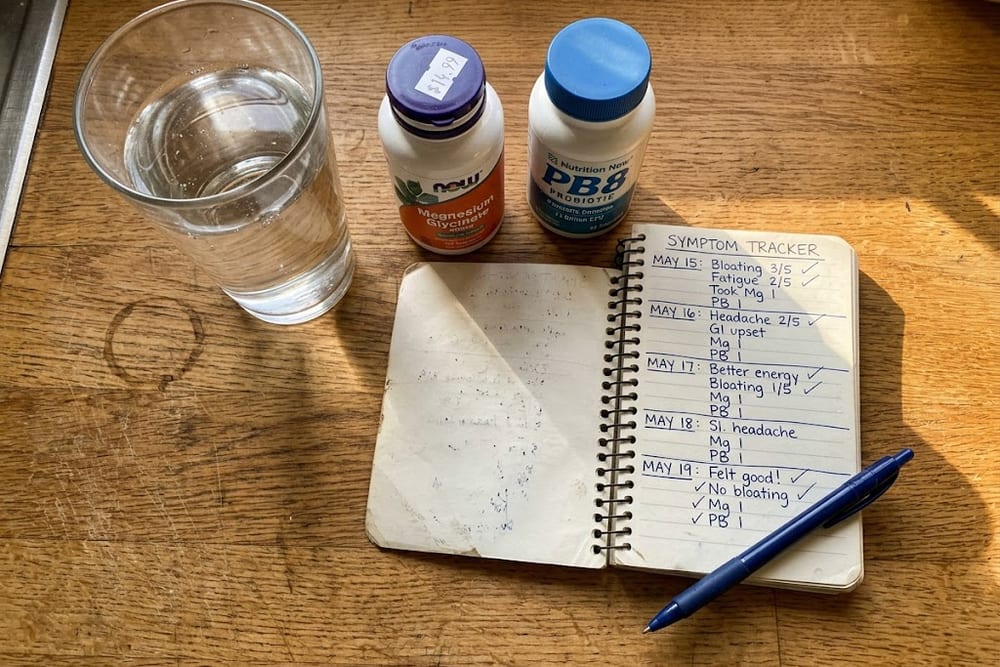
The test: No formal test. It is a pattern-recognition diagnosis. Two-week symptom journal — track daily weight, abdominal feel, sodium intake, where you are in your cycle. If bloating swings with the cycle and resolves within 2-3 days, this is your dominant cause.
The fix: Reduce dietary sodium (especially the ultra-processed-food load most Americans run on), increase potassium-rich foods (potatoes, leafy greens, bananas), increase water intake (counterintuitive but correct — dehydration drives vasopressin upward), and stabilize the estrogen swings with systemic HRT if the pattern is severe or accompanied by other vasomotor symptoms. Cyclic fluid retention often improves within one cycle of HRT initiation because the hormonal volatility driving the swings is smoothed.
Slowed gut motility (the estrogen-serotonin axis)
What it feels like: Bloating that gets worse as the day goes on, peaking by late afternoon or evening. Less frequent or harder bowel movements than you used to have. A feeling of fullness or pressure that improves after a bowel movement and returns 12-24 hours later. May or may not include audible gut sounds. Often accompanied by reduced appetite at dinner because the digestive system is still working on lunch.
Mechanism: Approximately 95% of the body's serotonin (5-HT) is produced in the gut wall — not the brain. Gut serotonin is the primary signal that drives peristalsis, the wave of muscle contraction that moves food through the GI tract. Estrogen modulates serotonin synthesis and 5-HT receptor sensitivity in the enteric nervous system. When estrogen drops in perimenopause, gut serotonin signaling weakens, peristalsis slows, food spends longer in the colon, more water is reabsorbed (drier stool), and the colonic and small-intestinal contents build up. The classic perimenopause stomach bloating pattern. Mulak, Taché, and Larauche (2014) document this in detail in World Journal of Gastroenterology; Heitkemper and colleagues (2008) confirmed the cyclic pattern across the menstrual cycle and reproductive transition in Women's Health.
The test: Track bowel frequency, stool form (Bristol Stool Scale), and the time-of-day pattern of bloating for two weeks. If bowel movements are less frequent or harder than your premenopausal baseline AND bloating worsens through the day, this is your dominant cause. No formal lab test — it is clinical.
The fix: Soluble fiber (psyllium husk, oats, chia) at 25-30 g daily total fiber, 200-400 mg magnesium glycinate or magnesium citrate at night (acts as an osmotic laxative and a smooth-muscle relaxant), adequate hydration, regular walking (yes, really — postprandial walking accelerates gastric emptying), and HRT to restore the underlying gut-serotonin signaling. Most women on HRT for this pattern see improvement within 4-8 weeks. If constipation is severe or longstanding, a clinician can prescribe a prokinetic agent like prucalopride.
SIBO (small intestinal bacterial overgrowth)
What it feels like: Bloating within 30-90 minutes of eating, especially after carbohydrates, beans, onions, garlic, dairy, fruit, or anything fermented. Visible distention — your stomach actually swells, not just feels full. Often accompanied by excessive gas (front or back end), burping, sometimes alternating constipation and loose stools. The bloating may be dramatic — flat stomach in the morning, six-months-pregnant-looking by dinner. Probiotics often make it worse, not better, because they are adding more bacteria to a region that already has too many.
Mechanism: The small intestine should be relatively low in bacteria. Bacteria belong primarily in the colon. When the small intestine is colonized by bacteria — typically migrating upstream from the colon — those bacteria ferment dietary carbohydrates in the wrong location, producing hydrogen or methane gas and causing visible distention. SIBO is favored by slowed gut motility, low stomach acid, structural abnormalities, and (the perimenopause link) the falling-estrogen-driven slowdown of the migrating motor complex that normally sweeps bacteria back to the colon. Pimentel and colleagues' 2020 ACG guideline in American Journal of Gastroenterology notes SIBO is more common in midlife women and is significantly under-diagnosed. Most women with the SIBO pattern have been told for years it is "IBS" or "stress."
The test: Lactulose or glucose hydrogen-methane breath test. You drink a sugar substrate, then breathe into a tube every 15-20 minutes for 2-3 hours. Bacteria in the small intestine ferment the sugar and produce hydrogen or methane that crosses into the bloodstream and is exhaled. A defined rise in either gas in the first 90 minutes is diagnostic. Most insurance covers this; if not, kits run $200-300 retail.
The fix: Antimicrobial treatment is the evidence-based first line — rifaximin (Xifaxan) 550 mg three times daily for 14 days is the most studied. Methane-dominant SIBO often requires rifaximin plus neomycin. Herbal antimicrobial protocols (berberine, oregano oil, allicin) have observational evidence and are used in functional medicine, though RCT evidence is thinner. A temporary low-FODMAP diet during and after treatment helps reduce symptom relapse. SIBO has a high recurrence rate (about 40% within a year) so addressing the underlying motility issue (cause 2, often with HRT) reduces relapse.
Visceral fat redistribution (the "bloating" that isn't actually bloating)
What it feels like: Your stomach looks bigger than it used to but does not change much through the day or with eating. Your waistband is tighter than it was a year ago. The scale may be the same as always, or only modestly higher, but your waist measurement is up an inch or two. Your hip-to-waist ratio has shifted — the classic "apple shape" replacing what used to be a more even distribution. This is often misidentified as "bloating" because the abdomen looks distended; it is actually an increase in abdominal adiposity.
Mechanism: Estrogen normally directs fat storage toward subcutaneous depots (hips, thighs). As estrogen drops in perimenopause and menopause, that signal weakens, and fat preferentially accumulates as visceral fat — the metabolically active fat around the abdominal organs. The result is an actual increase in abdominal circumference even when total body weight is stable. Visceral fat is also inflammatory and itself contributes to a low-grade bloating sensation. This is the part of perimenopause distended belly that does not go away when you skip dinner.
The test: A tape measure beats a scale here. Track waist circumference at the umbilicus weekly — an upward trend over months is the signature. DEXA body composition is the gold standard if you want a hard number; the test costs $50-150 and gives a precise visceral fat measurement. Bioimpedance scales are cheaper but less accurate for this purpose.
The fix: This is the slowest-to-respond cause and the one where supplements do least. Strength training 2-4 times a week is the highest-evidence intervention — visceral fat responds to muscle-mass increase more than to caloric restriction alone. Adequate dietary protein (1.2-1.6 g per kg body weight) preserves and rebuilds muscle. Modest caloric restriction can help, but extreme restriction is counterproductive and worsens muscle loss. HRT has modest favorable effects on body composition in randomized trials — it does not make visceral fat disappear, but it shifts the distribution back toward less abdominal accumulation and helps preserve lean mass. Alcohol contributes disproportionately to visceral fat in midlife; reducing intake helps.

The diagnostic workup — how to figure out which cause is yours
The four causes overlap, but the dominant driver usually shows itself within two weeks of patterned observation. The right sequencing of tests is what separates a useful workup from a thousand-dollar-and-still-confused workup. Here is the order:
| If your pattern is... | The probable cause | The first test | The first fix to trial |
|---|---|---|---|
| Cyclic puffiness (worse premenstrually or in surges) | Estrogen-driven fluid retention | Two-week symptom journal + daily weight | Reduce sodium, increase potassium, consider HRT |
| Constipation-dominant + worse late in day | Slowed gut motility | Bowel-frequency log; Bristol Stool Scale tracking | Fiber 25-30 g + magnesium glycinate 200-400 mg PM |
| Bloating within 30-90 min of eating; carb-triggered | SIBO (small intestinal bacterial overgrowth) | Lactulose or glucose hydrogen-methane breath test | Rifaximin 550 mg TID × 14 days (or herbal protocol) |
| Waist size up but weight stable; constant abdomen | Visceral fat redistribution | Weekly waist circumference; DEXA if available | Strength training 2-4×/week + protein 1.2-1.6 g/kg |
| Persistent + early satiety + pelvic pain + urinary urgency | Rule out ovarian/pelvic pathology | Transvaginal ultrasound + CA-125 | See gynecologist before assuming hormones |
The clinical sequence we suggest, in order: (1) a two-week symptom journal to identify the pattern; (2) basic labs (CBC, comprehensive metabolic panel, TSH, lipase, celiac panel) if you haven't had them recently; (3) trial of fiber-plus-magnesium for the motility pattern, because it is cheap, safe, and answers the question quickly; (4) breath testing for SIBO if the eating-trigger pattern is dominant; (5) pelvic ultrasound and CA-125 if persistent bloating clusters with Goff symptoms; (6) HRT discussion if perimenopausal symptoms cluster with the bloating. Doing all of these at once is wasteful; doing them in sequence usually solves it within 2-3 months.
What actually helps perimenopause bloating (ranked by evidence)
Once you know which cause is yours, the intervention list is short. Below are the interventions with the best evidence for at least one of the four mechanisms, ranked by impact and breadth of effect:
1. HRT — the systemic lever for causes 1, 2, and 4
Systemic hormone replacement therapy stabilizes the estrogen swings driving fluid retention (cause 1), restores gut serotonin signaling and motility (cause 2), and modestly improves body composition (cause 4). It does not treat SIBO directly but reduces SIBO recurrence by improving motility. Transdermal estradiol (patch or gel) or compounded estrogen-and-progesterone body cream are the typical preparations. The 2022 North American Menopause Society position statement supports systemic HRT as first-line for symptomatic perimenopausal women without contraindications. Time-to-effect for bloating is typically 4-12 weeks, in parallel with hot flash and sleep improvement. See our signs you need HRT piece for the framework on when this conversation is worth having.
2. Magnesium glycinate or citrate — for the constipation arm
200-400 mg of magnesium glycinate or citrate at night is the highest-evidence over-the-counter intervention for the motility-bloating pattern. Magnesium acts as an osmotic laxative (draws water into the colon, softens stool) and as a smooth-muscle relaxant. Glycinate is gentler on the stomach; citrate is stronger and slightly more laxative. Avoid magnesium oxide (poorly absorbed, causes diarrhea without effect on motility). $10-20 a month, minimal side effects at this dose, and most women feel a difference within a week.
3. SIBO treatment if testing positive
Rifaximin (Xifaxan) 550 mg three times daily for 14 days is the most studied antibiotic for hydrogen-dominant SIBO. Methane-dominant SIBO usually requires rifaximin plus neomycin 500 mg twice daily for the same duration. Both are prescription. Herbal antimicrobial protocols (berberine 5,000 mg/day, oregano oil, allicin) are used in functional medicine and have observational evidence; an RCT (Chedid 2014, Glob Adv Health Med) found a herbal protocol non-inferior to rifaximin in a small sample. A clinician who orders the breath test should also have the prescribing context to treat the result.
4. Strength training — for the visceral fat arm
Resistance training 2-4 times a week is the highest-evidence intervention for visceral fat in midlife women. The mechanism is partly that muscle is metabolically active tissue that competes with fat for substrate, partly that strength training stimulates favorable hormonal milieu (growth hormone, IGF-1), and partly that it directly resists the body-composition shift driven by estrogen drop. Combining strength training with adequate protein (1.2-1.6 g per kg body weight) and modest caloric balance produces measurable reductions in visceral fat over 3-6 months.
5. Reduced alcohol
Alcohol affects every arm of perimenopause bloating: it relaxes the lower esophageal sphincter (worsens reflux-related fullness), is calorie-dense and disproportionately stored as visceral fat in midlife, disrupts sleep (which worsens cortisol-driven bloating), feeds SIBO bacteria when present, and slows gut motility. The dose-response is real — women who reduce from 7+ drinks per week to 3 or fewer typically see meaningful bloating improvement within a few weeks. This is one of the highest-leverage and lowest-cost interventions.
What to stop spending money on
- "Debloat tea" and "menopause detox" products. Most are senna-based laxatives plus diuretics, which give a temporary appearance of reduced bloating by dehydrating you and forcing a bowel movement. The effect lasts a day; the underlying cause is unaffected.
- Expensive multi-strain probiotics without an indication. Probiotics have mixed evidence for general bloating; if your bloating is SIBO-driven, probiotics may make it worse, not better. Save your $40-80 a month until you know the cause.
- Charcoal supplements. Activated charcoal has no rigorous evidence for chronic bloating; can also interfere with absorption of medications and HRT.
- "Adrenal support" supplements. No mechanism for bloating, no good evidence, marketed at women in perimenopause because it is a high-anxiety category.
- Random elimination diets. Cutting out gluten or dairy without testing is more likely to add stress than fix bloating. Test first (celiac panel, lactose breath test), eliminate based on result.
- Apple cider vinegar. No mechanism for bloating; can worsen reflux.

When perimenopause bloating warrants prompt evaluation
Most perimenopause bloating is benign and falls into one of the four causes above. The patterns below are NOT typical perimenopause bloating and need clinical evaluation, not a self-managed trial:
- The Goff cluster: persistent bloating PLUS early satiety PLUS pelvic or abdominal pain PLUS urinary urgency or frequency, for more than 12 days a month and for less than 12 months. This is the ovarian-cancer symptom index. Ask for transvaginal ultrasound and CA-125.
- Bloating with unintentional weight loss. Weight loss in the setting of chronic bloating is concerning for gastrointestinal malignancy (gastric, pancreatic, colorectal) or malabsorption. Workup includes labs, abdominal imaging, and often endoscopy/colonoscopy.
- Bloating with blood in stool (visible or occult). Colon cancer screening is overdue for many women in their 40s and 50s; new bloating plus any blood in stool is an indication for prompt colonoscopy.
- New severe abdominal pain. Persistent severe pain — particularly right-upper-quadrant (gallbladder), epigastric (ulcer, pancreatitis), or pelvic — needs same-week medical evaluation.
- Vomiting or inability to keep down food/fluids. Suggests obstruction or gastroparesis; emergency department evaluation if severe.
- Jaundice (yellow skin or eyes) with bloating. Hepatic or biliary pathology; needs immediate evaluation.
- A palpable abdominal mass. Self-discovered mass in the abdomen or pelvis needs imaging.
The rule: if your bloating is part of a pattern that includes any of the symptoms above, see a clinician this week — do not wait for a self-managed trial to fail. Perimenopause bloating is real, but the cost of mis-attributing a serious GI or gynecologic problem to hormones is high. Most of the time, the workup is reassuring. Doing the workup is the point.
How ClearedRx prescribes HRT for perimenopause bloating
ClearedRx is a doctor-supervised HRT service for women, online. You take a one-minute quiz. A licensed physician in our network reviews your symptoms and history within 24 hours. If you are a fit, they prescribe — and your treatment ships discreetly to your door, usually the same week. We prescribe both compounded and FDA-approved HRT preparations; the patient picks based on cost, format preference, and clinical fit.
For perimenopause bloating specifically, the relevant preparation is systemic HRT — transdermal estradiol patch or gel, oral or transdermal estradiol with progesterone if you have a uterus, or a compounded estrogen-and-progesterone body cream applied to thigh or arm. Local vaginal estrogen targets genitourinary symptoms and does not consistently affect GI bloating because it produces minimal systemic absorption. For bloating you want a systemic preparation that stabilizes estrogen levels across the day, restores gut motility, and addresses the underlying volatility.
Most women who add systemic HRT for the fluid-retention or motility arms of perimenopause bloating see improvement within 4-12 weeks. The visceral-fat arm responds more slowly and benefits from HRT plus strength training plus protein adequacy. SIBO needs to be tested and treated separately even if you are on HRT — HRT improves the conditions that prevent SIBO recurrence, but it does not eradicate an established overgrowth. Cost framing: ClearedRx HRT starts at $49/month for compounded preparations and $89/month for FDA-approved generics, all-in. New patients save 50% on the first month. For broader cost context, our HRT cost comparison walks through every formulation across every channel.

"Sex hormones modulate visceral pain perception, gastrointestinal motility, and the enteric serotonergic system. The fluctuating hormonal milieu of the perimenopausal transition creates a unique vulnerability to bloating, altered bowel habits, and visceral hypersensitivity that is mechanistically distinct from premenopausal symptoms." — Mulak A, Taché Y, Larauche M. Sex hormones in the modulation of irritable bowel syndrome. World J Gastroenterol. 2014;20(10):2433-2448.
If you want to map the rest of the perimenopause picture
Perimenopause bloating almost never travels alone. The same low-and-erratic-estrogen environment that drives the bloating typically also produces hot flashes, sleep disruption, mood changes, irregular periods, and new midsection weight on overlapping timelines. Mapping the full constellation is the cheapest diagnostic move you can make before deciding what to do next. Our Menopause Symptom Score is a free 60-second self-check that scores the cluster as a single hormonal-fingerprint number. For deep-dive symptom context, our menopause belly piece covers the body-composition arm in detail, our 34 symptoms of perimenopause pillar maps the full catalogue, our perimenopause vs menopause piece walks through which symptom-stage maps to which treatment, our signs you need HRT piece walks through when the conversation is worth having, our perimenopause fatigue piece covers another commonly-clustered symptom, our perimenopause cramps without a period piece covers a sister GI/pelvic pattern, and our menopause statistics 2026 page has the prevalence numbers across symptoms.
Frequently asked questions
Why am I so bloated in perimenopause?
Perimenopause bloating has four distinct biological causes that most articles flatten into one. Estrogen-driven fluid retention (aldosterone and vasopressin signaling) explains the cyclic puffiness. Slowed gut motility — because estrogen modulates serotonin in the gut wall and falling estrogen reduces peristalsis — explains the constipation-bloating pattern. Small intestinal bacterial overgrowth (SIBO) becomes more common in perimenopause because slowed motility lets bacteria migrate upstream. And visceral fat redistribution gives an actual increase in abdominal circumference that masquerades as bloating. Each cause has a different test and a different fix.
Does perimenopause cause permanent bloating?
Not usually. Three of the four causes — fluid retention, motility-driven bloating, and SIBO — are treatable and reversible. The fourth, visceral fat redistribution, is an actual change in body composition that responds slowly to strength training, dietary protein, and sometimes HRT, but is not "permanent bloating" in the literal sense. Bloating that does not improve after a full workup (including breath testing and pelvic imaging) needs further evaluation; persistent unexplained bloating in a woman over 40 should be screened for ovarian and gastrointestinal pathology.
What's the difference between perimenopause bloating and weight gain?
Bloating fluctuates within a day or across a few days — your stomach is flat at 6 AM and distended by 4 PM. Weight gain shows up on the scale, persists overnight, and tends to track waist size on a tape measure over weeks. The trick in perimenopause is that visceral fat redistribution (cause 4) is technically weight gain in the abdomen even when total body weight is stable — your scale may not move while your waist measurement does. A tape measure beats a scale for tracking this pattern. DEXA body composition is the gold standard if you want a hard number. See our menopause belly piece for the body-composition deep-dive.
Does HRT help perimenopause bloating?
Yes, but it depends which cause you have. Systemic HRT stabilizes the estrogen swings that drive the fluid-retention pattern, restores gut serotonin signaling and motility, and modestly improves visceral fat distribution. It does not treat SIBO directly. The clinical pattern: women whose bloating clusters with hot flashes, sleep changes, and irregular periods tend to see real improvement within 4-12 weeks of starting HRT. Women whose bloating is dominated by SIBO need that treated separately even if they are on HRT. A clinician can sort which driver dominates.
Can perimenopause cause SIBO?
Yes — indirectly, via slowed gut motility. SIBO (small intestinal bacterial overgrowth) is favored by slowed peristalsis because the migrating motor complex that normally sweeps bacteria out of the small intestine becomes weaker. Estrogen modulates gut serotonin, and falling estrogen in perimenopause slows motility — which creates exactly the environment SIBO needs to develop. Pimentel et al.'s 2020 American College of Gastroenterology guideline notes the increased SIBO prevalence in midlife women. Diagnosis is by lactulose or glucose breath testing; treatment is typically rifaximin or a structured herbal antimicrobial protocol.
When should I worry about perimenopause bloating?
Most perimenopause bloating is benign. The cluster that warrants prompt evaluation is the Goff symptom index for ovarian cancer: persistent bloating PLUS early satiety (feeling full quickly) PLUS pelvic or abdominal pain PLUS urinary urgency or frequency, for more than 12 days a month and for less than 12 months. About 90% of ovarian cancers in women 40+ present with persistent bloating, and most are dismissed before the workup is done. Other red flags: bloating with unintentional weight loss, blood in stool, severe new pain, or a personally palpable abdominal mass. If you have any of those, ask your gynecologist or primary care doctor about a transvaginal ultrasound and a CA-125 blood test.
What's the best diet for perimenopause bloating?
The honest answer: there is no single best diet, and the right approach depends on which cause is dominant. For the motility-bloating pattern, soluble fiber (psyllium, oats) plus 200-400 mg magnesium glycinate at night helps most people. For SIBO-driven bloating, a temporary low-FODMAP diet is the evidence-supported short-term approach during antimicrobial treatment, but FODMAP is not a long-term diet. For the fluid-retention pattern, reducing sodium and ultra-processed food helps modestly. For visceral fat, protein at 1.2-1.6 g per kg body weight and strength training matter more than any specific diet. Random elimination diets without a confirmed pattern usually add stress without fixing the bloating.
Does intermittent fasting help perimenopause bloating?
Mixed. Some women find that a 12-14 hour overnight fast gives the migrating motor complex enough time to clear the small intestine — which can help SIBO-driven bloating. More aggressive fasts (16:8, OMAD) work for some women but increase cortisol and disrupt sleep in others, which can worsen the underlying hormonal volatility. There is no perimenopause-specific RCT data to recommend a particular fasting protocol for bloating. The simpler intervention with better evidence is just not eating in the 3 hours before bed and eating smaller more frequent meals during the day.
Should I cut out gluten or dairy in perimenopause?
Only if you have a documented sensitivity or you have systematically tested elimination and reintroduction with consistent symptom response. Celiac disease should be tested (tissue transglutaminase IgA) before going gluten-free — going gluten-free first makes the test inaccurate. Lactose intolerance can be tested by trial elimination over 2-4 weeks. Random elimination of gluten or dairy without a workup often produces a temporary placebo benefit, then bloating returns because the actual driver (SIBO, motility, fluid retention) was never addressed. Get the test before you cut the food group.
Will my bloating go away after menopause?
Often, but not always. Once estrogen stabilizes at a low postmenopausal baseline (12 months after the final period and beyond), the wild swings driving fluid retention and motility-bloating settle, and many women see real improvement. SIBO, if it was present, needs to be specifically treated — it does not resolve just because estrogen has stabilized. Visceral fat redistribution generally continues or worsens after menopause unless it is actively addressed with strength training, protein, and (often) HRT. The fluctuating bloating pattern usually improves; the body-composition shift usually does not, on its own.
Sources & references
- Mulak A, Taché Y, Larauche M. Sex hormones in the modulation of irritable bowel syndrome. World J Gastroenterol. 2014;20(10):2433-2448. PMID: 24587648
- Heitkemper MM, Cain KC, Jarrett ME, et al. Symptoms across the menstrual cycle in women with irritable bowel syndrome. Womens Health (Lond Engl). 2008. PMID: 19086094
- Pimentel M, Saad RJ, Long MD, Rao SSC. ACG Clinical Guideline: Small Intestinal Bacterial Overgrowth. Am J Gastroenterol. 2020;115(2):165-178. PMID: 32294476
- Goff BA, Mandel LS, Drescher CW, et al. Development of an ovarian cancer symptom index. Cancer. 2007;109(2):221-227. PMID: 17409327
- The North American Menopause Society. The 2022 Hormone Therapy Position Statement of The North American Menopause Society. Menopause. 2022;29(7):767-794. PMID: 35797481
- Chedid V, Dhalla S, Clarke JO, et al. Herbal therapy is equivalent to rifaximin for the treatment of small intestinal bacterial overgrowth. Glob Adv Health Med. 2014;3(3):16-24. PMID: 24891990
- Lovejoy JC, Champagne CM, de Jonge L, et al. Increased visceral fat and decreased energy expenditure during the menopausal transition. Int J Obes (Lond). 2008;32(6):949-958. PMID: 18332882
- Davis SR, Castelo-Branco C, Chedraui P, et al. Understanding weight gain at menopause. Climacteric. 2012;15(5):419-429. PMID: 22978257
- Endocrine Society. Menopause and Hormone Therapy Clinical Practice Guideline. endocrine.org
- Internal: menopause belly · 34 symptoms of perimenopause · perimenopause vs menopause · signs you need HRT · perimenopause fatigue · perimenopause cramps without a period · menopause statistics 2026 · menopause symptom score
If you want to address the cause and not just the symptom — talk to a clinician
ClearedRx prescribes evidence-based HRT — transdermal estradiol, progesterone, or a combined cream — based on your full picture, with 24-hour MD review and free shipping in all 50 states. Compounded preparations from $49/month, FDA-approved generics from $89/month. No insurance hassle. New patients save 50% on the first month.
Find out if HRT is right for me